
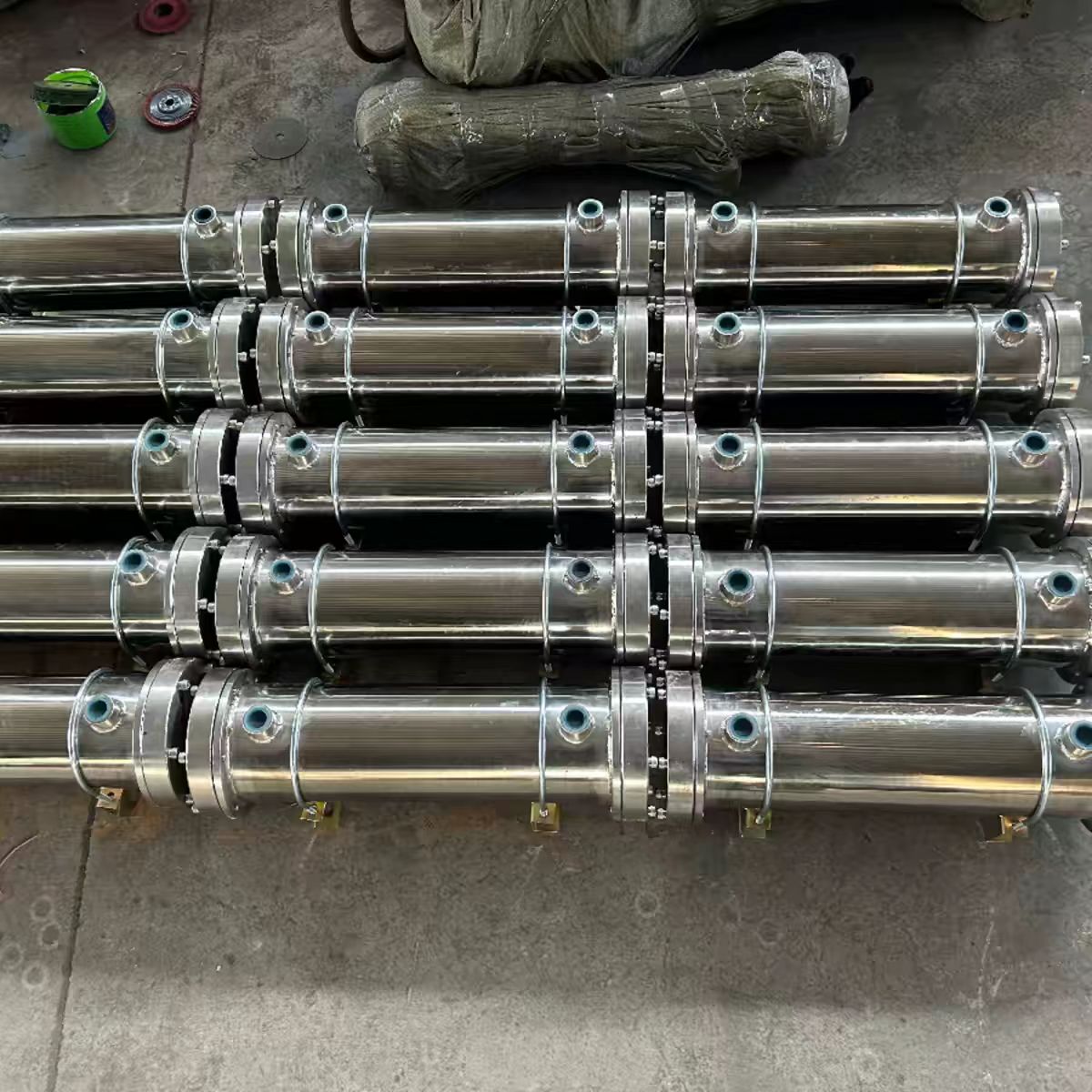
During on-site inspections, leakage traces are often found at the connection between the tube bundle and the shell of fixed tubesheet heat exchangers, especially when the temperature difference on the process side fluctuates significantly. The root cause of such problems often lies in the mismatch between the selection of thermal expansion compensation structures and the operating conditions.
Due to low manufacturing cost and compact structure, the fixed tubesheet design operates stably under conditions where the temperature difference between the tube wall and shell wall does not exceed 50°C. Once this range is exceeded, the expansion difference between the shell and tube bundle is converted into thermal stress at the connection between the tubesheet and tube bundle, and long-term action can easily cause failure of welds or expansion joints. In this case, compensation structures such as those with expansion joints or floating heads should be selected to release the thermal stress onto deformable components.
Observe the readings of the inlet and outlet pressure gauges and thermometers. If the pressure difference increases by more than 0.05 MPa above the initial value, it usually means that scaling on the tube side or shell side has affected heat transfer efficiency, and cleaning should be arranged. During design and selection, cleaning connections and maintenance space must be reserved to avoid later maintenance difficulties caused by structural limitations.
When comparing different schemes, designers can focus on the following parameters: design pressure, design temperature, heat exchange area, characteristics of tube-side and shell-side media, and allowable pressure drop. For occasions with large temperature differences and inconvenient frequent maintenance, floating head or expansion joint structures are more suitable; for working conditions with small temperature differences and clean media, the fixed tubesheet type can reduce initial investment.

