
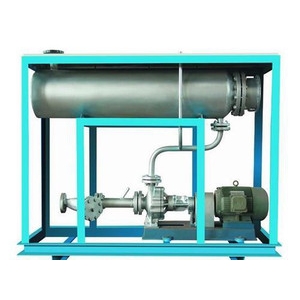
Compared with plate heat exchangers, the GCH-160 shell and tube heat exchanger has wider flow channels and better tolerance to particle deposition; compared with double-pipe heat exchangers, the tube bundle can be pulled out for cleaning, and the shell does not need to be replaced entirely during maintenance. During selection, note that: design pressure, design temperature, heat exchange area, and medium inlet/outlet pipe diameter should match the system. If selection is based only on the main material and the chloride ion content in the medium is ignored, pitting corrosion may occur in the tube bundle. It is recommended that design and selection personnel evaluate the tube bundle material separately according to the medium composition.
During operation, pressure gauge and thermometer readings should be recorded regularly. When the inlet/outlet pressure difference increases by more than 0.05 MPa above the initial value, it usually indicates fouling deposition in the tube side or shell side, and cleaning should be arranged. Compared with solutions that rely on online chemical cleaning, this structure can use mechanical cleaning or tube bundle extraction, reducing the amount of chemicals used. After cleaning, the pressure difference must be re-measured to confirm that it has returned to the design range.
Design pressure, design temperature, heat exchange area, and medium inlet/outlet pipe diameter are the basic basis for selection. The heat exchange area should be calculated according to the heat load and temperature difference with a certain margin, but it should not be too large, so as to avoid increasing pressure drop. Pipe diameter selection should be combined with allowable pressure drop and flow velocity. For working conditions containing chloride ions, duplex stainless steel or titanium can be selected for the tube bundle material, and the specific choice should be determined according to the medium concentration and temperature.
The GCH-160 shell and tube heat exchanger is suitable for heating or cooling in HVAC, chemical process, power auxiliary equipment, and other systems. During maintenance, attention should be paid to the aging of flange seals and they should be replaced periodically. When shut down for a long time, the internal medium should be drained to prevent corrosion. If leakage is found at the connection between the tube bundle and the tubesheet, the equipment should be shut down for inspection and handled by plugging or replacing tubes.

