
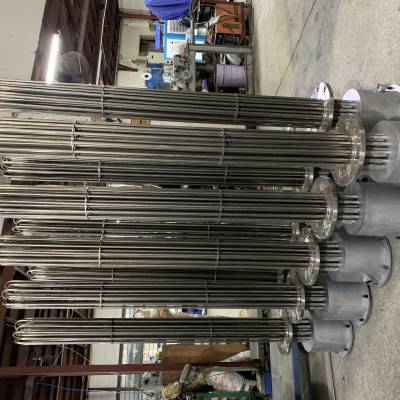
In chemical, HVAC, or light industry processes, design and selection engineers often face a contradiction: the heat exchange area of standard models does not fully match actual operating conditions, while modification risks excessive pressure drop and material waste. The GCH-100 shell and tube heat exchanger addresses this stage by providing an engineering solution with adjustable parameters.
During selection, first clarify the chemical composition, temperature, and flow velocity of the tube-side and shell-side media, then determine the tube bundle length and baffle spacing based on the allowable pressure drop. The GCH-100 has a design pressure of 1.6 MPa, a design temperature of 200°C, and a nominal heat exchange area of 100 m². The tube side and shell side can each use carbon steel or stainless steel in combination. If the medium is highly corrosive, select stainless steel for the tube side and carbon steel for the shell side, balancing corrosion resistance and economy.
After the equipment is put into operation, observe the pressure gauge and thermometer readings. If the inlet-outlet pressure difference rises by more than 0.05 MPa above the initial value, it usually means that fouling on the tube side or shell side has affected heat transfer efficiency, and cleaning should be scheduled. The GCH-100 has a fouling discharge connection on the shell, and the tube bundle can be withdrawn for mechanical or chemical cleaning.
When comparing different options, designers can focus on the following parameters: design pressure, design temperature, heat exchange area, characteristics of tube-side and shell-side media, and allowable pressure drop. The GCH-100 is suitable for steam-water heat exchange, water-water heat exchange, and some oil cooling scenarios, and the connection specifications can be adjusted according to the piping system.

