
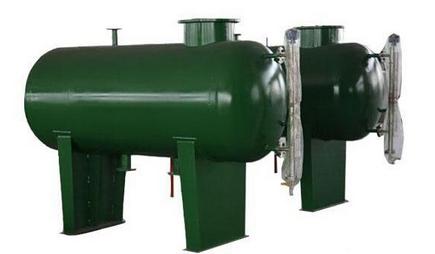
The BXS-80 brazed stainless steel heat exchanger uses vacuum brazing to connect the plates into a fully welded structure, eliminating rubber gaskets. Compared with gasketed detachable plate heat exchangers, this product has no leakage paths caused by gasket aging or swelling. Routine maintenance mainly consists of external cleaning and inspection of operating parameters, with no need for periodic disassembly and replacement of seals. It is suitable for a temperature range of -40°C to 200°C and a design pressure of 3.0 MPa, and can be used in refrigeration, heating, and general industrial heat exchange circuits.
From the perspective of medium corrosion data, chloride ion concentration is a parameter that needs to be checked first when selecting a brazed stainless steel heat exchanger. Stainless steel may undergo pitting corrosion and stress corrosion in chloride-containing media, and concentration, temperature, and pH value jointly affect the corrosion risk. Design and selection personnel should first confirm the chloride ion content in the medium and the operating temperature, then determine whether to use this product, and if necessary, evaluate other material options. Compared with detachable structures, a fully welded structure cannot be opened to inspect the inner surface of the plates, so medium compatibility should be confirmed at the selection stage.
This product is suitable for liquid and gas heat exchange applications that are clean and have controlled chloride ion content, such as air-conditioning chilled water systems, hydraulic oil cooling, and waste heat recovery. For media containing particles, prone to scaling, or with relatively high chloride ion concentration, detachable plate heat exchangers or shell-and-tube heat exchangers are more adaptable in terms of cleaning and corrosion resistance. During selection, a comprehensive judgment should be made based on medium composition, maintenance conditions, and pressure and temperature parameters.

