
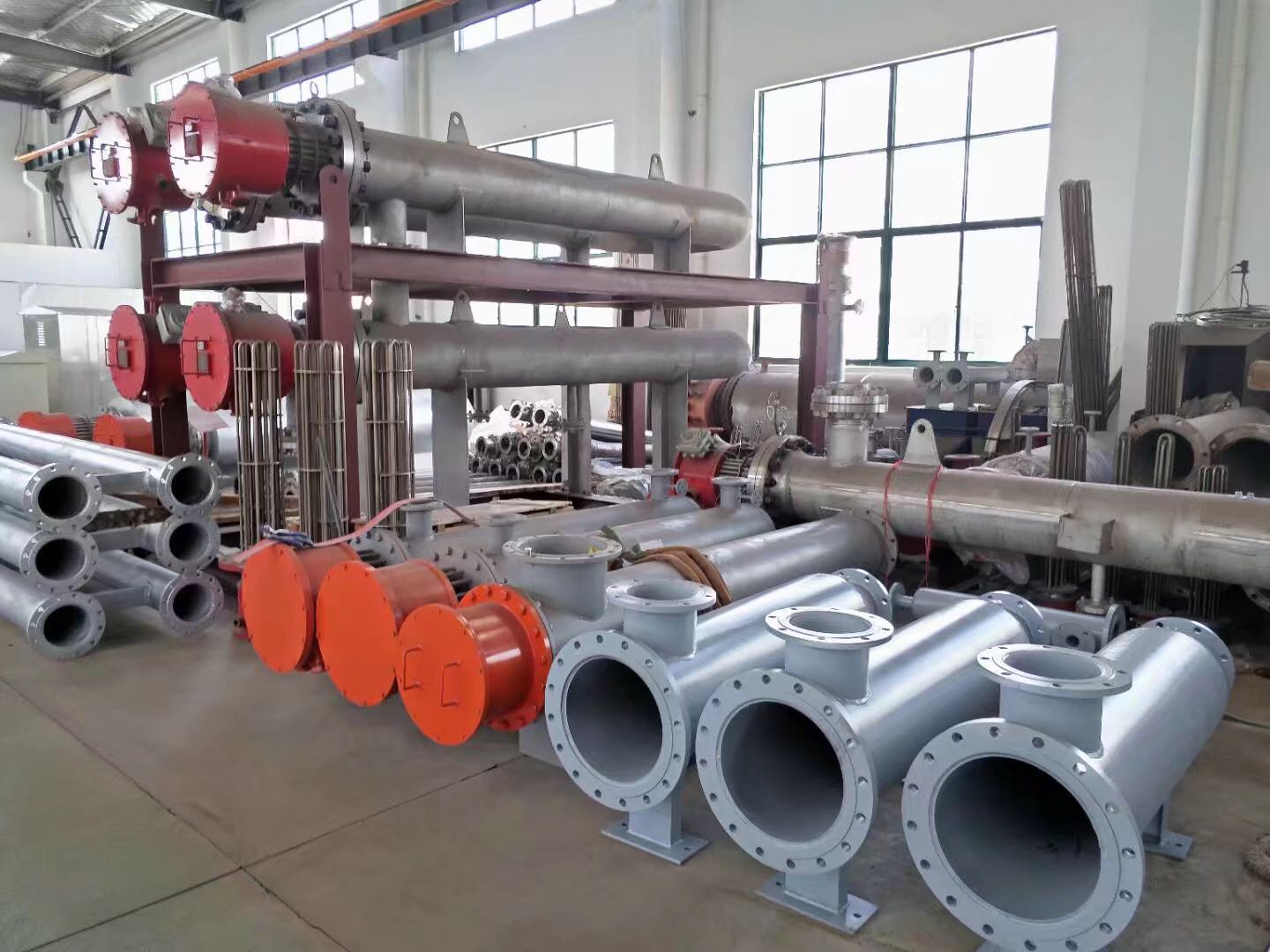
After completing pipeline connections at a chemical or HVAC site, it is recommended to first check whether the inlet and outlet directions are consistent with the design drawings, and then inspect the tightening status of all pressure-bearing interfaces. Brazed stainless steel heat exchangers use a fully welded structure with no rubber gaskets, so gasket preload does not need to be considered during installation. However, it should be confirmed that the supports are securely fixed to avoid fatigue of the nozzle welds caused by vibration during operation. Before the first startup, a low-pressure airtightness test can be performed on the system. The test pressure should not exceed 1.1 times the design pressure, and the pressure holding time should be no less than 30 minutes.
Procurement personnel may require the operations and maintenance team to regularly record the following data: inlet and outlet temperatures, flow rates, and pressure drop on both the hot side and cold side. When the pressure drop rises by more than 15% above the initial value, it usually indicates that deposits or scaling may have formed in the flow channels between the plates. The applicable temperature range is -40°C to 200°C, and the design pressure is 3.0 MPa. It is recommended to reserve a margin of more than 10% in actual operation to avoid long-term operation under limit parameters. If a decrease in heat exchange efficiency is found, historical data can be compared first, and then a shutdown inspection can be arranged.
For short-term shutdown, it is recommended to drain the internal medium to prevent residual liquid from freezing in low-temperature environments. Before long-term shutdown, the flow channels can be flushed with clean water and dried. The brazed structure is not recommended to be disassembled at will. If internal blockage is suspected, chemical cleaning may be used, with a cleaning agent compatible with stainless steel and avoiding chloride-containing components. After cleaning, it must be thoroughly rinsed with clean water and subjected to a pressure test again.
When signing the technical agreement, procurement personnel may explicitly require the supplier to provide material certificates and brazing process descriptions. During routine maintenance, avoid scratching the plate surface with hard tools. If system components are replaced, it is necessary to confirm that the working pressure and temperature range of the new components match those of the heat exchanger. Spare parts should be stored in a dry and ventilated place to prevent corrosion of the interfaces.

