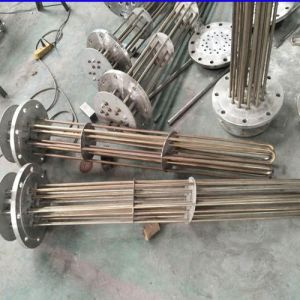
Anti-corrosion nitric acid heater is a device specially designed for heating nitric acid while resisting its strong corrosive effect. Nitric acid is a strong oxidizing agent and strong acid, widely used in industry, such as in metal processing, fertilizer production, organic synthesis and other fields. Due to its high corrosiveness, selecting appropriate materials and technologies is crucial for manufacturing nitric acid heaters.
Material Selection
For components in contact with nitric acid, the following materials are typically selected
Alloy steel: such as 316L stainless steel, which has certain resistance to nitric acid at low concentrations and temperatures.
Nickel-based alloys: such as Hastelloy, which have good corrosion resistance to high temperature and high concentration nitric acid.
Titanium and its alloys: which have good corrosion resistance to most concentrations of nitric acid.
Structural Design
The design of anti-corrosion nitric acid heaters needs to consider the following aspects:
Heat exchange area: determine the appropriate heat exchange area according to heating requirements.
Fluid dynamics: ensure smooth flow of nitric acid inside the heater, reducing corrosion risks caused by dead zones and turbulence.
Temperature difference control: avoid excessive temperature differences that may lead to material stress cracking.
Manufacturing Process
Welding technology: use high-quality welding techniques such as TIG (Tungsten Inert Gas) or MIG (Metal Inert Gas) welding to ensure the sealing and corrosion resistance of joints.
Surface treatment: improve surface finish through methods like polishing to reduce adhesion of corrosive media.
Operation and Maintenance
Pre-startup inspection: confirm that all connections are well sealed and there is no leakage.
Regular inspection: conduct regular internal inspections to assess corrosion conditions and promptly replace damaged components.
Cleaning and maintenance: regularly clean the inside and outside of the heater to prevent sediment accumulation from affecting heat transfer efficiency.
If you are writing an article about anti-corrosion nitric acid heaters, you can discuss the above aspects. If you need more specific technical details or case studies, please provide more detailed requirements so that I can offer you more in-depth information.