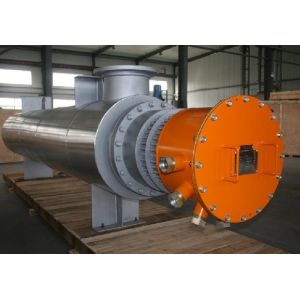

Working Principle
The working principle of an asphalt heater mainly includes the following aspects:
Heating medium: Typically, heat transfer oil is used as the heating medium, which can achieve higher temperatures at lower operating pressures.
Heat exchange: A unique vortex heat film tube is used as the heat exchange element. The heat transfer medium (heat transfer oil) flows in the tube side, while asphalt flows in the shell side between tubes.
Temperature control: The outlet temperature of asphalt is detected by temperature sensors, and the amount of heating medium (heat transfer oil) is regulated through a temperature control valve, thereby ensuring a constant asphalt temperature.
Functional Features
Uniform and rapid heating: Capable of heating asphalt uniformly and quickly.
Easy automatic temperature control: Equipped with an automatic control system that can precisely control the heating temperature.
High thermal efficiency: The thermal efficiency is typically 3-5 times that of ordinary heat exchangers.
Safe and efficient: Uses electric heating or other safe and efficient heating methods, such as fuel oil heating.
Environmental and energy-saving: Designed with a focus on energy conservation and emission reduction.
Heating Methods
Common asphalt tank heating methods include the following:
Direct open flame heating: Directly heats asphalt with flames, but may cause local overheating, affecting asphalt quality.
Water heating: Uses water or steam as the heat carrier to heat asphalt, which ensures asphalt quality and equipment safety.
Fuel oil heating: Uses crude oil, heavy oil, diesel, residual oil, and coal tar as heating fuels, providing fast heating and environmental friendliness, but safety measures are required.
Application Scenarios
Road construction: When laying new roads, solid or semi-solid asphalt needs to be heated to a liquid state.
Road maintenance: During road repair or patching work, the temperature of asphalt needs to be maintained to preserve its fluidity and workability.
Development Trends
With technological advancements, asphalt heaters are developing towards greater efficiency and environmental friendliness. For example, using more advanced heat exchange elements and technologies to improve thermal efficiency, and adopting more environmentally friendly heating methods.
Summary
Asphalt heaters are indispensable and important equipment in road construction and maintenance, heating and maintaining the temperature of asphalt materials in an efficient and safe manner to ensure construction quality and efficiency. With continuous technological progress, future asphalt heaters will place greater emphasis on energy conservation and environmental protection, and incorporate more intelligent designs.
If you need more detailed information or have other specific questions, please feel free to let us know.