
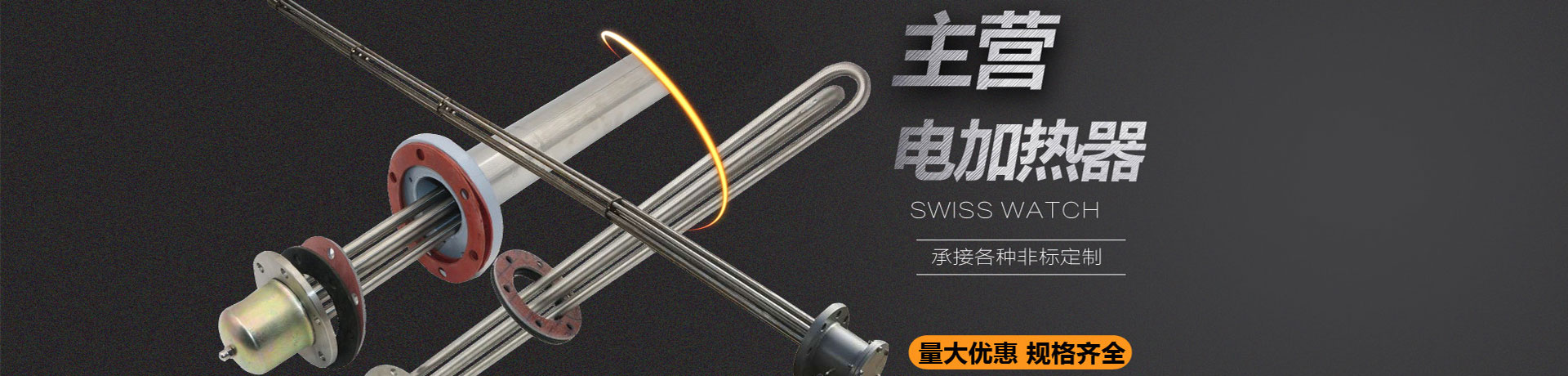
Tubular electric heater, also known as heating tube or heating element
Tubular electric heater, as a widely used heating element, plays an important role in industrial production and daily life due to its compact structure, high thermal efficiency, and strong adaptability. The following is an in-depth analysis of tubular electric heaters, covering aspects such as basic construction, working principle, selection guide, usage tips, and maintenance.
Basic Construction
Tubular electric heater, also known as heating tube or heating element, has its core components consisting of a metal tube, an internal spiral resistance wire, and insulating powder filled around the resistance wire and in the gaps. The metal tube is usually made of stainless steel or high-temperature resistant alloy materials to ensure good heat resistance and mechanical strength. The resistance wire is the key to heat generation, producing thermal energy when energized. Insulating powder, such as crystalline magnesium oxide, not only has excellent insulating properties but also effectively transfers heat. The ends of the heating wire are connected to the power supply through lead-out rods or wires, allowing the entire component to be safely placed in the medium to be heated.
Working Principle
The operation of the electric heater is based on the Joule heating effect generated by the current passing through the resistance wire. When current flows through the resistance wire, the resistance generates heat, which is then rapidly transferred through the metal tube wall and insulating layer to the surrounding medium, such as liquid, gas, or solid. According to application requirements, tubular electric heaters can be designed with different power, shapes, and sizes to meet specific heating needs.
Selection Guide
- Medium Characteristics: Consider the physical and chemical properties of the heating medium, such as viscosity and corrosiveness, to select appropriate materials and insulating materials.
- Power Density: Choose a suitable power density based on heating rate and temperature requirements, typically with a surface load between 2-3.8 W/cm².
- Installation Method: Determine whether the heater needs immersion, flange connection, or air heating installation methods.
- Control Method: Decide whether to equip a temperature controller for precise temperature control as needed.
Usage Tips
- Voltage Compliance: Ensure the working voltage does not exceed 1.1 times the rated value to prevent overload.
- Effective Grounding: The shell should be reliably grounded to ensure safety.
- Medium Immersion: If heating liquid, ensure the heating element is fully immersed to avoid dry burning.
- Regular Inspection: Regularly check the insulation performance of the heater and the condition of the medium to prevent scaling or corrosion from affecting efficiency.
Maintenance
- Cleaning: Regularly clean the heater surface to avoid carbon deposits affecting thermal efficiency.
- Temperature Monitoring: Continuously monitor the temperature of the heating medium during use to prevent overheating.
- Electrical Inspection: Regularly check circuit connections to ensure electrical safety.
Through the above in-depth understanding of various aspects, it can be seen that the design and application of tubular electric heaters is a comprehensive reflection of knowledge from multiple disciplines such as materials science, thermodynamics, and electrical engineering. Correct selection, reasonable use, and regular maintenance are key to ensuring their efficient and safe operation.