
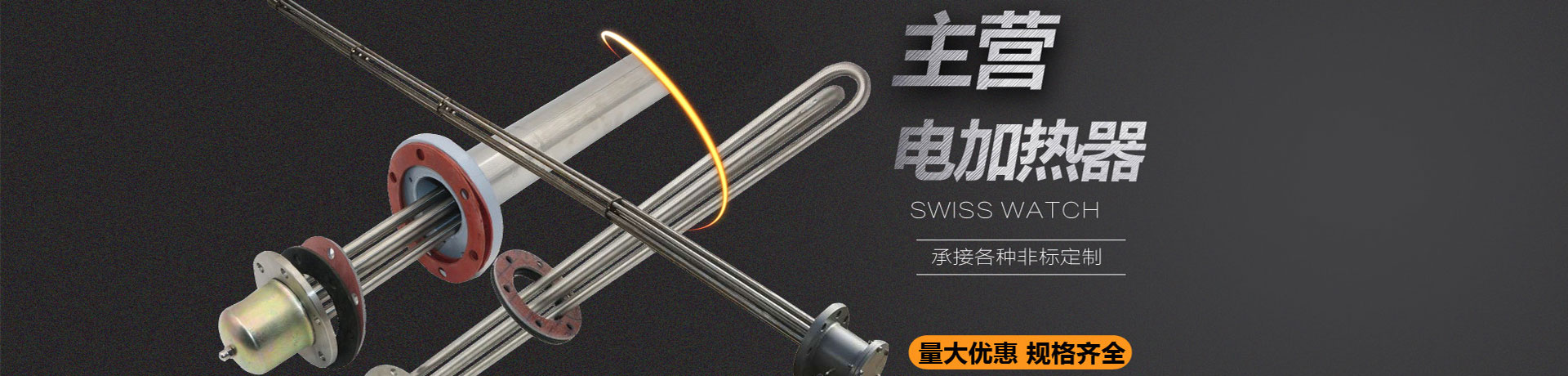
Air dry burning heating tubes, as electric heating elements specifically designed for air heating, can directly heat air without a liquid medium. They are widely used in industrial ovens, drying equipment, HVAC systems, and various scenarios requiring air heating. This article will delve into the working principle, characteristics, application fields, and usage precautions of air dry burning heating tubes.
Working Principle and Structure
The core component of an air dry burning heating tube is the electric heating wire, typically made of high-resistance alloy materials such as nickel-chromium alloy, enclosed in a high-temperature-resistant metal tube filled with good insulating and thermally conductive materials like magnesium oxide powder. When current passes through the heating wire, electrical energy is converted into thermal energy, directly heating the surrounding air through the metal tube wall. This design allows the heating tube to work efficiently in an air medium, even under "dry burning" conditions without damage.
Characteristics and Advantages
Rapid Heating: Air dry burning heating tubes can quickly raise the temperature of the surrounding air, suitable for applications requiring immediate heating.
Low Thermal Inertia: That is, the heating tube responds quickly to temperature changes and can reach the set temperature rapidly.
High Thermal Efficiency: The optimized heat conduction path ensures maximum efficiency in converting electrical energy into thermal energy.
Long Service Life: Made of high-quality materials and processes, it can maintain stable performance under prolonged high-temperature conditions.
Wide Applicability: Suitable for heating both static and flowing air, including various ovens, drying cabinets, HVAC systems, etc.
Application Fields
Industrial Production: In industries such as chemical, textile, and food processing, used for raw material drying, product drying, curing, and other processes.
Construction and HVAC: In HVAC systems, used to raise indoor temperature and improve living and working environments.
Laboratory and Research: In laboratories, used to accelerate chemical reactions, sample drying, or constant temperature control.
Agriculture and Aquaculture: In greenhouses, farms, etc., to provide suitable temperature conditions for plant growth and animal survival.
Usage Precautions
Although air dry burning heating tubes are designed for air heating, the following points should be noted to ensure safety and performance:
Avoid Blockage: Ensure sufficient air circulation around the heating tube to prevent dust or foreign objects from blocking and affecting heat dissipation.
Temperature Control: Use a temperature controller to avoid safety hazards or energy waste caused by overheating.
Regular Inspection: Regularly check the electrical connections and insulation of the heating tube to prevent short circuits or leakage.
Avoid Excessive Humidity: Although dry burning heating tubes are suitable for air heating, in high-humidity environments, measures should be taken to prevent moisture from entering the heating tube, which could affect insulation performance.
Conclusion
Air dry burning heating tubes, with their rapid heating, high thermal efficiency, and wide application range, have become an ideal choice for air heating in industrial and civil fields. Through reasonable design and use, air dry burning heating tubes can not only provide precise temperature control but also effectively improve energy utilization efficiency, providing safe and reliable solutions for various heating needs. With technological advancements, future air dry burning heating tubes will become more intelligent and environmentally friendly, better adapting to changing market demands.