
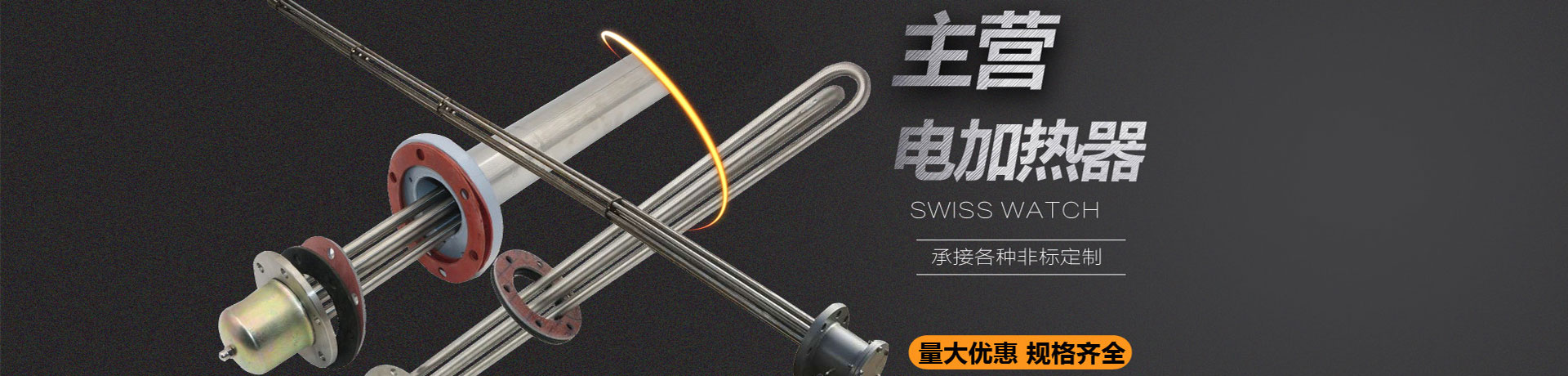
As an efficient and environmentally friendly heating method, electric radiant tubes play a crucial role in modern industry. They are widely used in various industries such as metal processing, chemical engineering, food, and textiles, and have become the preferred heating element in many heat treatment processes due to their unique heating principle and structural design.
Working Principle and Structure
The basic structure of an electric radiant tube includes a protective tube that encapsulates an electric heating element inside. These heating elements, typically made of high-temperature resistant alloy materials (such as nickel-chromium alloy), can withstand high temperatures without losing their electrical properties. The protective tube is made of heat-resistant stainless steel or other high-temperature resistant materials to isolate the heating element from the external environment, preventing corrosion and short circuits.
When current passes through the heating element, the element generates heat, heating the tube to high temperatures. Subsequently, through the high-temperature radiation from the surface of the stainless steel tube, heat is effectively transferred to surrounding objects or media. This process primarily relies on radiant heat transfer rather than traditional convective heat transfer, resulting in higher heating efficiency and stable operation in vacuum or inert gas environments.
Features and Advantages
High Efficiency and Energy Saving: Electric radiant tubes can directly convert electrical energy into thermal energy, transferring it through radiation, which reduces energy conversion losses and achieves higher energy utilization efficiency.
Environmentally Friendly and Pollution-Free: Since the heating process does not involve combustion, electric radiant tubes do not produce harmful emissions, making them environmentally friendly and aligned with the concept of green production.
Sturdy Structure: Made of high-temperature resistant materials, electric radiant tubes have good mechanical strength and durability, allowing for long-term stable operation under harsh conditions.
Easy to Control: By adjusting the input power, the heating temperature can be easily controlled, achieving precise temperature control to meet different process requirements.
Wide Applicability: Electric radiant tubes are suitable for various heating environments, including but not limited to oxidizing, reducing, and corrosive atmospheres, demonstrating broad adaptability and flexibility.
Application Fields
Metal Processing: In fields such as metal smelting, heat treatment, and welding, electric radiant tubes provide uniform heating, helping to improve the quality of metal products.
Chemical Industry: Used for catalytic heating in chemical reactions, as well as heating treatment of liquids and gases.
Food Processing: In baking, drying, and sterilization processes, electric radiant tubes can provide rapid and uniform heating, ensuring food safety and quality.
Textile Industry: Used for pre-treatment and post-treatment of fibers and fabrics, such as dyeing, setting, and drying.
Conclusion
With its high efficiency, environmental friendliness, and controllability, electric radiant tubes have become an important component of modern industrial heating technology. With the advancement of technology and the development of materials science, future electric radiant tubes will be more energy-efficient and intelligent, bringing greater benefits and convenience to industrial production. Whether from the perspective of economic benefits or environmental protection, electric radiant tubes are a heating technology worth promoting and applying.