
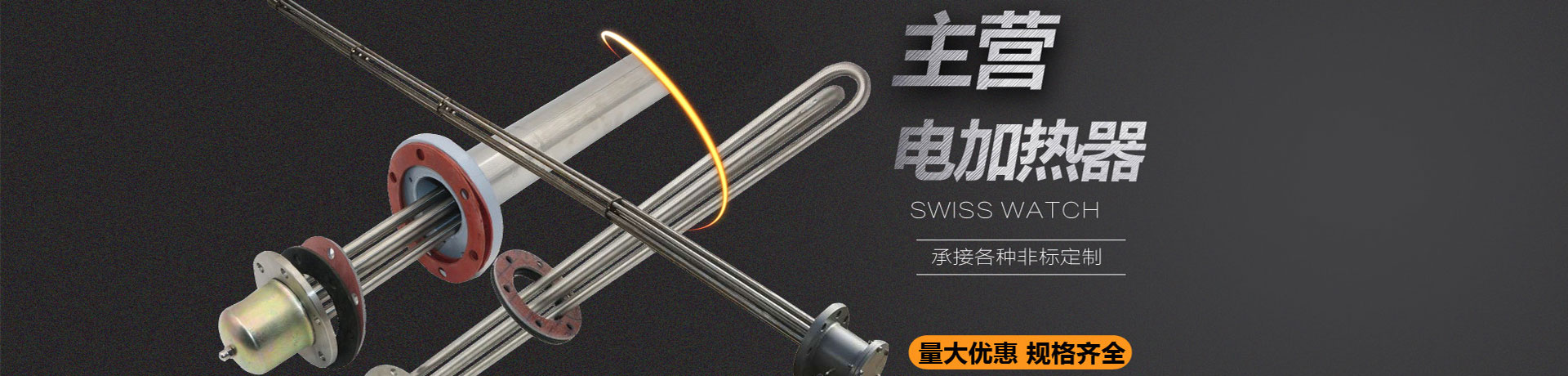
A single-end heating rod is a heating element widely used in industrial, commercial, and household fields. Its simple design and flexible use allow it to quickly provide heating effects for liquid or solid media. This article will detail the working principle, technical features, application areas, and usage precautions of single-end heating rods.
1. Overview of Single-End Heating Rods
A single-end heating rod is a tubular electric heater with one end sealed and the other end connected to the power supply. This design allows the heating rod to be easily installed in various containers, especially suitable for space-constrained situations. Single-end heating rods typically use high-quality stainless steel tubes as the outer shell, filled with insulating material inside, and equipped with resistance wire as the heating element.
2. Working Principle
The working principle of a single-end heating rod is relatively simple:
Resistance wire heating: When current passes through the resistance wire, the wire heats up.
Heat transfer: The heated resistance wire transfers heat to the insulating material filled inside the tube.
Thermal conduction: The insulating material evenly conducts heat to the stainless steel tube wall.
Heating medium: The tube wall transfers heat to the surrounding medium, achieving the heating purpose.
3. Technical Features
The main technical features of single-end heating rods include:
Compact structure: The design is compact, making it easy to install in limited spaces.
Rapid heating: It can quickly reach the set temperature, saving energy.
High thermal efficiency: High-quality materials ensure good thermal conductivity.
Strong durability: Made of high-temperature resistant materials, it can work stably for a long time in harsh environments.
High safety: Equipped with overheat protection devices to ensure safe use.
4. Application Areas
Due to its unique structure and efficient heating capability, single-end heating rods are widely used in multiple fields:
Industrial heating: Used for heating liquids such as oil and water, as well as gases like air.
Household appliances: Such as water heaters, coffee machines, electric kettles, etc.
Laboratory equipment: Used for heating experiments in laboratories.
Chemical production: Used in heating processes in equipment such as chemical reactors and evaporators.
5. Usage Precautions
To ensure the normal operation and extend the service life of single-end heating rods, the following points should be noted:
Correct installation: Ensure the heating rod is firmly installed in the designated position to avoid loosening.
Medium quality: Keep the heating medium clean to avoid blockage by impurities.
Overheat protection: Install overheat protection devices to prevent damage caused by excessive temperature.
Regular inspection: Regularly check the insulation performance and electrical strength of the heating rod to ensure safety and reliability.
6. Maintenance and Care
Regular cleaning: Regularly remove scale around the heating rod to maintain good thermal conductivity.
Insulation testing: Regularly test the insulation performance of the heating rod to ensure safety and reliability.
Replace damaged parts: Once damage or performance degradation is found, replace the damaged parts promptly.
Storage conditions: When not in use, store in a dry and ventilated place to avoid moisture.
7. Conclusion
As an efficient and convenient heating element, single-end heating rods are widely used in industrial production and daily life. Through reasonable design, careful manufacturing, and appropriate maintenance, single-end heating rods can work stably for a long time, providing reliable support for various heating needs. With continuous technological advancement, future single-end heating rods will become more efficient, energy-saving, and environmentally friendly.