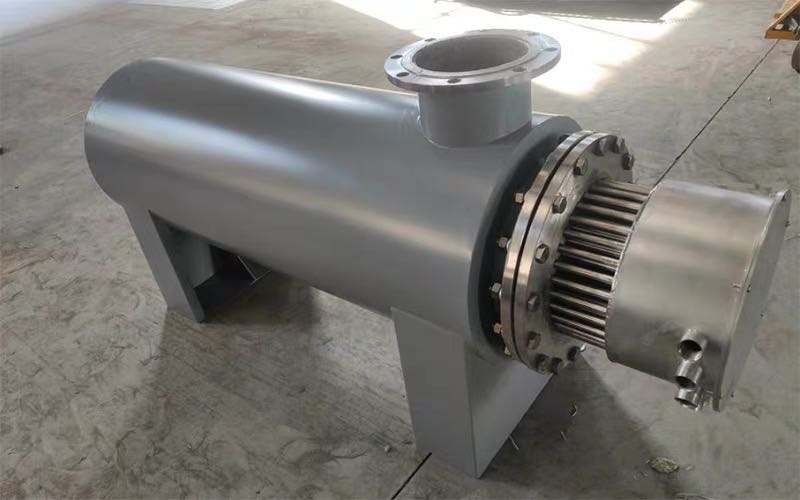
Ceramic Heating Coil: Principles, Features and Applications
Ceramic heating coil is a heating element widely used in industrial fields. Due to its unique performance and advantages, it has important applications in multiple industries. Below is an overview of an article about ceramic heating coils:
Ceramic Heating Coil: Principles, Features and Applications
Ceramic heating coil is an efficient heating element widely used in plastic processing, chemical industry, food processing and other industries. Its main features are high temperature resistance, fast heating, long service life, and good thermal and chemical stability.
Working Principle
The working principle of ceramic heating coil is to heat through the resistance heating effect generated when current passes through the heating element. The heating element usually uses high-temperature resistant ceramic material as the base, with resistance wire embedded inside. When the resistance wire is energized, it generates heat. The excellent performance of ceramic materials ensures that the heating element can work stably for a long time in high-temperature environments.
Structural Composition
The structure of ceramic heating coil mainly includes the following parts
Ceramic base: Made of high-frequency ceramic, it has the characteristics of fast heat transfer, hard and not easy to break, and no deformation at high temperatures.
Resistance wire: Usually made of imported round wire ceramic wound into a spring shape and threaded into ceramic strips. The choice of resistance wire determines the heating efficiency and service life of the heating coil.
Insulation layer: Usually made of high-temperature insulation cotton (such as aluminum silicate fiber board), which can effectively reduce heat loss.
Protective shell: Made of stainless steel or other high-temperature resistant materials, it plays a role in protecting the heating element.
Main Features
High temperature resistance: Ceramic heating coils can withstand temperatures above 1000°C, suitable for working under high-temperature conditions.
Fast heating speed: Can reach the required temperature in a short time.
High thermal efficiency: Due to efficient heat conduction and insulation design, the thermal efficiency is usually as high as over 90%.
Long service life: High-quality materials and structural design ensure the durability of the heating coil.
Easy installation: Beautiful appearance, flexible design, easy to install and maintain.
Good safety: Has good insulation performance and high voltage resistance.
Application Scope
Ceramic heating coils are widely used in the following fields:
Plastic processing: Used for heating equipment such as plastic injection molding machines and extruders.
Chemical industry: Widely used in chemical reactors, pipeline heating, etc.
Food processing: Used for heating food processing equipment such as ovens and roasters.
Other fields: Such as heating applications in medicine, electronics and other industries.
Usage Cases
Case 1: In a plastic products factory, ceramic heating coils are used in the heating system of injection molding machines to ensure the raw materials reach the appropriate temperature before being injected into the mold. By using ceramic heating coils, not only is the heating speed improved, but energy consumption is also reduced.
Case 2: A chemical plant uses ceramic heating coils to heat its reactors to promote chemical reactions. The high efficiency and long life of ceramic heating coils save the plant a lot of maintenance costs.
Conclusion
As a high-performance heating element, ceramic heating coil plays an important role in the industrial heating field due to its high temperature resistance, fast heating, and high thermal efficiency. With the continuous advancement of technology, the application scope of ceramic heating coils will further expand, bringing higher benefits to more industries.
The above content provides a basic overview of ceramic heating coils. It should be noted that different models and brands of ceramic heating coils may have different characteristics and usage methods. Before actual operation, please refer to the specific user manual and technical documentation.