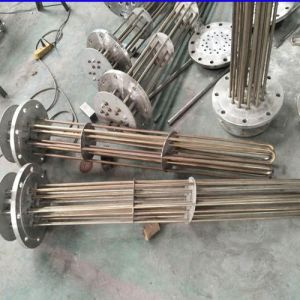
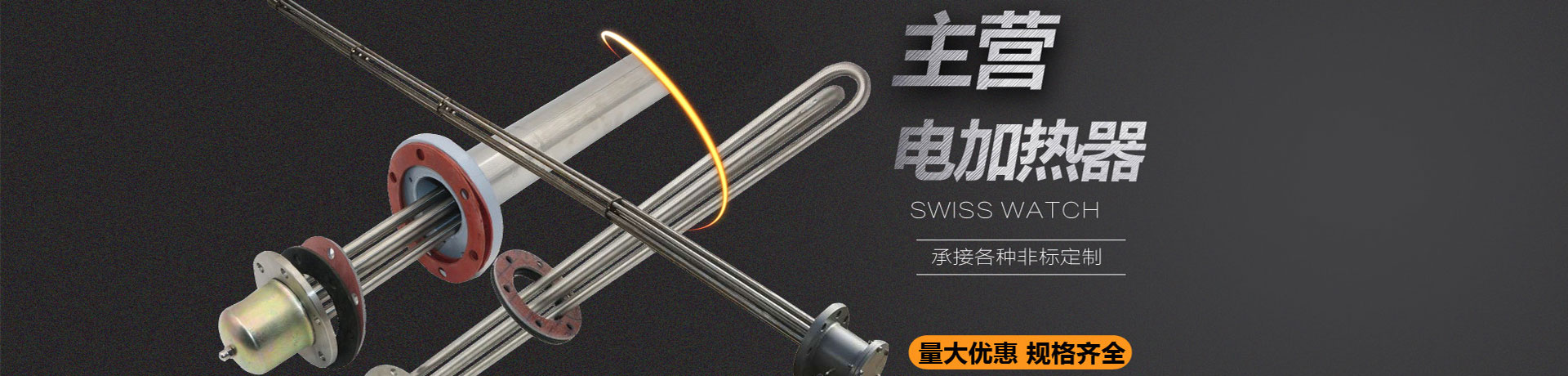
It is typically used in applications that require precise temperature control. This type of heater has diverse designs and can be customized according to specific application needs. Below is a brief introduction to tubular electric heaters, including their working principle, application fields, and some important design considerations.
Introduction to Tubular Electric Heaters
Working Principle
Tubular electric heaters mainly consist of one or more heating elements, which are usually enclosed in a metal tube. The heating elements can be resistance wires or other forms of resistive materials. When current passes through these resistive materials, they generate heat due to the resistance effect. The metal tube not only serves as a carrier for the heating elements but also acts as a heat transfer medium, transferring the generated heat to the surrounding medium. Common shell materials include stainless steel, copper alloys, etc., which have good corrosion resistance and thermal conductivity.
Application Fields
Tubular electric heaters are widely used in multiple industries due to their compact structure, high heating efficiency, and easy installation and maintenance:
Chemical industry: used for heating in various chemical reaction processes.
Oil and gas: heating crude oil during extraction to reduce viscosity for easier transportation.
Food processing: used for heating or sterilizing liquids in processes.
Water treatment: used in water heating systems, such as water heaters and boilers.
Medical equipment: used in certain medical devices to maintain specific temperature environments.
Design Considerations
There are many factors to consider when designing tubular electric heaters:
Power density: choose appropriate power density based on the required heating speed.
Material selection: decide which material to use for the heating tube based on the nature of the heating medium.
Dimensions: determine the length, diameter, and other parameters of the heater according to the installation space and heating area size.
Safety: during design, it is necessary to consider preventing overheating, short circuits, and other issues, and ensure the heater can operate within the set safety range.
Tubular electric heaters play an important role in modern industrial production due to their flexible design and reliable performance. With technological advancements, more efficient and energy-saving new generation products may emerge in the future, providing better services to various industries.