Professional Manufacturer of Nonwoven Fabric Heaters
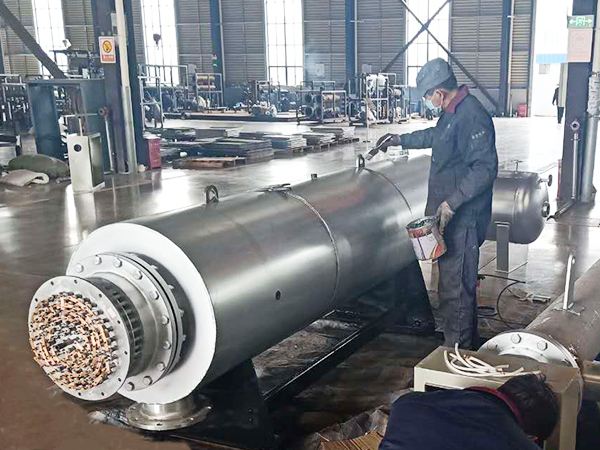
It is a device that converts electrical energy into thermal energy. The cold medium enters the inner cavity of the heater and, following the designed path, fully contacts the flange heating core within the heater cavity, then is sent to the heat-using equipment after reaching the required temperature. The temperature control system of the heater automatically adjusts the heater's power based on the feedback signal from the temperature sensor at the heater outlet, ensuring energy efficiency while meeting heat demand. The electrical control system is equipped with overheat protection. If the temperature sensor inside the heater cavity detects that the temperature is too high or there is a dry-burning condition, the power will be immediately cut off to prevent material deterioration due to excessive temperature, which could cause coking, carbonization, or damage to the heating tubes due to dry burning.
Applications in melt-blown fabric equipment (melt-blown nonwoven fabric, melt-blown fabric machines):
In the production process of melt-blown nonwoven fabric, the compressed air output from the air compressor enters the air electric heater after passing through inlet dehumidification and filtration. After being heated to the set process temperature, it is transmitted to the melt-blown die head assembly.
The melt-blown process has high requirements for hot air. By adopting a matching control cabinet and configuring an accurate temperature control system, the temperature difference can be controlled within the range of ±1°C.
The melt-blown process flow is: polymer preparation → melt extrusion → metering pump → melt-blown die head assembly → melt filament stretching → cooling → receiving device. The main melt-blown equipment includes: feeding machine, screw extruder, metering pump, melt-blown die head assembly, air compressor, air electric heater, receiving device, and winding device. For producing raw materials such as polyester, additional equipment like chip drying devices is also needed. Auxiliary production equipment mainly includes: die head cleaning furnace, electrostatic application device, and spray device, etc.
Features:
1. Can heat the medium to very high temperatures, up to 850°C, while the shell is only 50°C;
2. Fast heating and cooling rates, up to 10°C/s, with stable and rapid temperature adjustment, without issues like temperature overshoot or lag, suitable for automatic control;
3. The heating element is made of stainless steel alloy material, with high mechanical performance and strength under the influence of high-pressure airflow and water flow;
4. High efficiency, reaching over 90%;
5. Compact size, easy to operate and maintain;
6. Under normal operating conditions, the lifespan can reach over ten years, durable and long-lasting.