

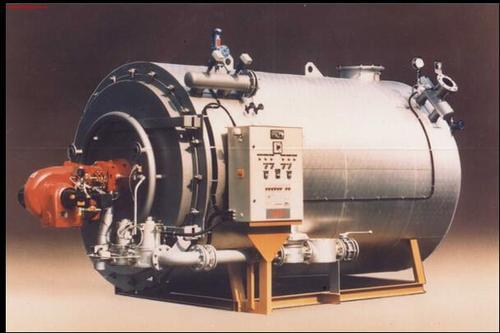
Selection of Pressure Gauges in Electric Heating Thermal Oil Furnaces
Classification of pressure gauges, selection of pressure gauges, and theirinstallation and daily maintenance.
1 Classification of pressure gauges
According to different conversion principles, pressure gauges can be roughly divided into four categories:
The first type is the liquid column pressure gauge:
Based on the principle of fluid statics, the measured pressure is displayed through the height of the liquid column. There are different structural forms, so they can be divided into U tube pressure gauges, single-tube pressure gauges, etc. These pressure gauges have simple structures and are convenient to use, but due to the capillary action of the working fluid, density, parallax, and other factors, their accuracy can be greatly affected. Because their measurement range is relatively narrow, they are generally used to measure lower pressures, pressure differences, or vacuum degrees.
The second type is the elastic pressure gauge:
It converts the measured pressure through the displacement of elastic element deformation, such as spring tube pressure gauges, diaphragm pressure gauges, and spring tube pressure gauges, etc.
The third type is the electrical pressure gauge:
It converts the measured pressure into electrical quantities (such as voltage, current, frequency, etc.) of mechanical and electrical components for measurement, such as various pressure transmitters and pressure sensors.
The fourth type is the piston pressure gauge:
According to the principle of hydraulic pressure transmission and the principle of weight balance, it converts the measured pressure into the weight of the piston and the weight placed on it for measurement. This type of pressure gauge has high measurement accuracy and a wide measurement range, and is suitable for calibrating other pressure gauges.
2 Selection of pressure gauges
When selecting a pressure gauge, the following points should be noted:
(1) Determine the type of pressure gauge based on the measured medium, working environment, and accuracy requirements. For example, for measuring media that are corrosive, viscous, or prone to crystallization, a diaphragm pressure gauge or a pressure gauge with isolation devices should be selected. For measuring media with high temperature, a pressure gauge with a cooling device should be selected. For measuring flammable, explosive, or toxic media, a pressure gauge with explosion-proof or safety features should be selected.
(2) Determine the measurement range of the pressure gauge based on the measured pressure value. Generally, the measured pressure should be within 1/3 to 2/3 of the full scale of the pressure gauge. For measuring stable pressure, the maximum measured pressure should not exceed 3/4 of the full scale; for measuring fluctuating pressure, the maximum measured pressure should not exceed 2/3 of the full scale.
(3) Determine the accuracy level of the pressure gauge based on the allowable error of the measured pressure. The smaller the allowable error, the higher the accuracy level required. Generally, for pressure gauges used for calibration, the accuracy level should be 0.5 or above; for pressure gauges used for on-site measurement, the accuracy level can be 1.5 or 2.5.
(4) Determine the connection size and installation method of the pressure gauge based on the installation location and connection method. For example, for radial connection, axial connection, or flange connection, etc.
3 Installation and daily maintenance of pressure gauges
(1) The pressure gauge should be installed at a location that is easy to observe and maintain, and should be kept away from vibration, heat sources, and corrosive environments.
(2) When installing, a three-way cock or a pressure gauge valve should be installed between the pressure gauge and the pressure tapping point for easy replacement and maintenance.
(3) During use, the pressure gauge should be regularly checked and calibrated. If any malfunction is found, it should be repaired or replaced in a timely manner.
(4) The pressure gauge should be kept clean and dry, and avoid impact and vibration.
In summary, the correct selection and use of pressure gauges are of great significance for ensuring the safe operation of electric heating thermal oil furnaces.
