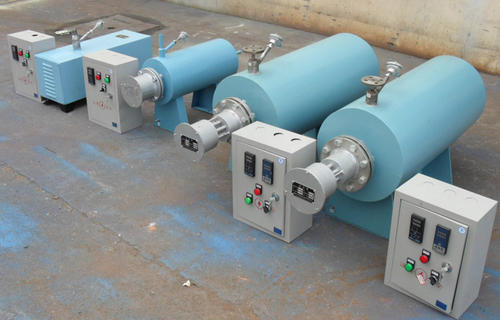
Pipeline heaters are divided into two modes
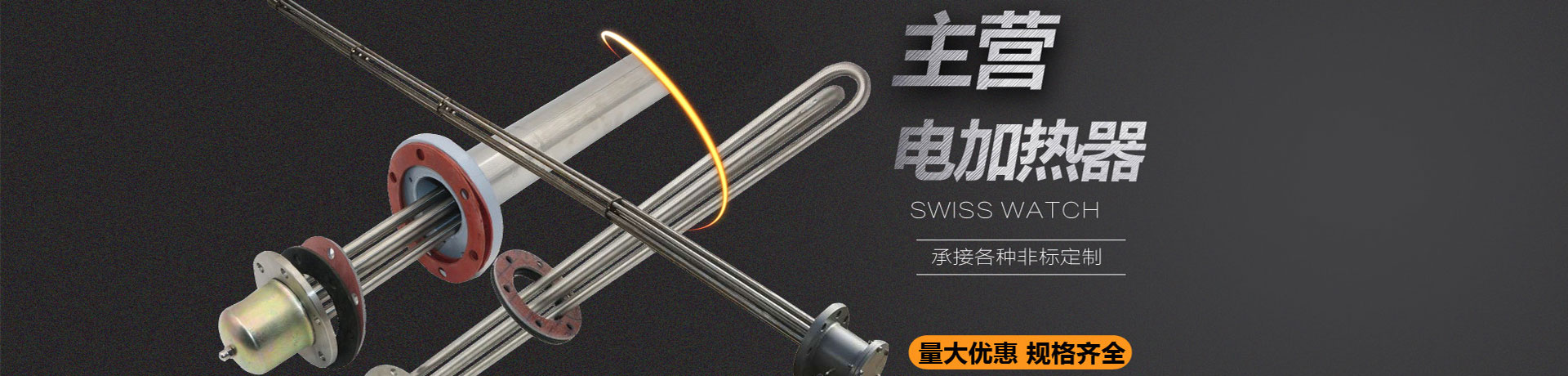
The first mode is to insert the flange-type tubular electric heating elements inside the pipeline heater upside down into the jacket of the reactor in the pipeline heater to heat the heat transfer oil, thereby transferring the thermal energy in the pipeline heater to the chemical raw materials in the reactor inside the pipeline heater. The second mode is to directly insert the tubular electric heating elements of the pipeline heater into the reactor inside the pipeline heater, or to evenly distribute electric heating tubes around the walls of the pipeline heater. This mode is called the internal heating type of the pipeline heater. The internal heating type of the pipeline heater heats up quickly and has high efficiency.
Another mode is the far-infrared electric heating device. That is, the electric heater in the internal system of the pipeline heater wraps around the bottom of the reactor inside the pipeline heater and the middle and lower parts of the pipeline heater for heating. The far-infrared electric heating device of the pipeline heater has a large heating area in the internal system of the pipeline heater, stable and fast temperature rise, uniform heat release, convenient temperature control, and can be controlled in upper, middle, and lower sections. The temperature of the kettle wall inside the kettle is easy to control, and it has no side effects on the materials in the kettle, nor will it cause carbonization of materials in the pipeline heater. The pipeline heater operates without noise, pollution, and has a long service life (more than 30,000 hours), with significant energy saving (more than 28%).
The pipeline heater is a new generation of reactor heater in the internal system of the pipeline heater. It uses electric heating combined with far-infrared technology to evenly distribute heat into the kettle inside the pipeline heater. Compared with the original heat transfer oil and steam heating, the pipeline heater saves production costs by more than 30%; the temperature control system of the pipeline heater uses silicon controlled rectifiers as the main components and is equipped with a computer interface. The pipeline heater uses a computer to analyze and control temperature differences, making it easier for operators. The far-infrared in the pipeline heater promotes blood circulation and is beneficial to human health. In the context of energy conservation, emission reduction, and environmental protection, the development prospects of pipeline heaters are also expanding. Many large chemical units at home and abroad are correspondingly replacing heat transfer oil and steam heating with far-infrared heating.
Pipeline heater is also an efficient, environmentally friendly, and energy-saving radiant heater. After being powered on, the pipeline heater can form a strong wide-spectrum directional radiation in the vertical space of the pipeline heater, effectively converting electrical energy into far-infrared radiation energy of the pipeline heater, directly transferring it to the object to be dried, rapidly converting it into molecular thermal motion, drying from the inside out, achieving the purpose of rapid drying and shaping, and achieving significant energy-saving effects of the pipeline heater. The silicon carbide far-infrared electric heating plate of the pipeline heater uses a silicon carbide plate coated with metal oxide, i.e., far-infrared coating, as the radiation element. Heating wires are installed in the element holes (or grooves), and a thick layer of insulation, refractory, and heat-insulating materials is placed at the bottom of the element. Then, a metal shell is installed, and wiring terminals are installed for use. The silicon carbide in the pipeline heater has a room temperature flexural strength of 45Mpa, a high-temperature flexural strength of 50Mpa at 1000 ℃, a volume density of 2.7-2.75g/cm3, a thermal expansion rate of 0.42-0.48% at 900℃, and a thermal conductivity (350℃) of 10.3-16.7w/m.k. When the far-infrared radiation in the pipeline heater radiates onto an object, absorption, reflection, and transmission can occur. The material to be heated and dried absorbs far-infrared radiation energy simultaneously at a certain depth inside the pipeline heater and on the surface molecules of the pipeline heater, generating a self-heating effect, causing the solvent or water molecules in the pipeline heater to evaporate, and the heating is uniform, thereby avoiding deformation and quality changes caused by different degrees of thermal expansion, keeping the appearance, physical and mechanical properties, fastness, and color of the material intact.
Pipeline heaters are widely used in industries such as automobiles, textiles, printing and dyeing, dyes, papermaking, bicycles, refrigerators, washing machines, chemical fibers, ceramics, electrostatic spraying, grain, food, pharmaceuticals, chemicals, and tobacco, achieving ultra-fast drying purposes. Pipeline heaters have the advantages of good radiation effect, significant power saving, and convenient use and maintenance. The heating of pipeline heaters is also particularly suitable for large drying rooms, drying ovens, and conveyor drying tunnels for leather machinery.