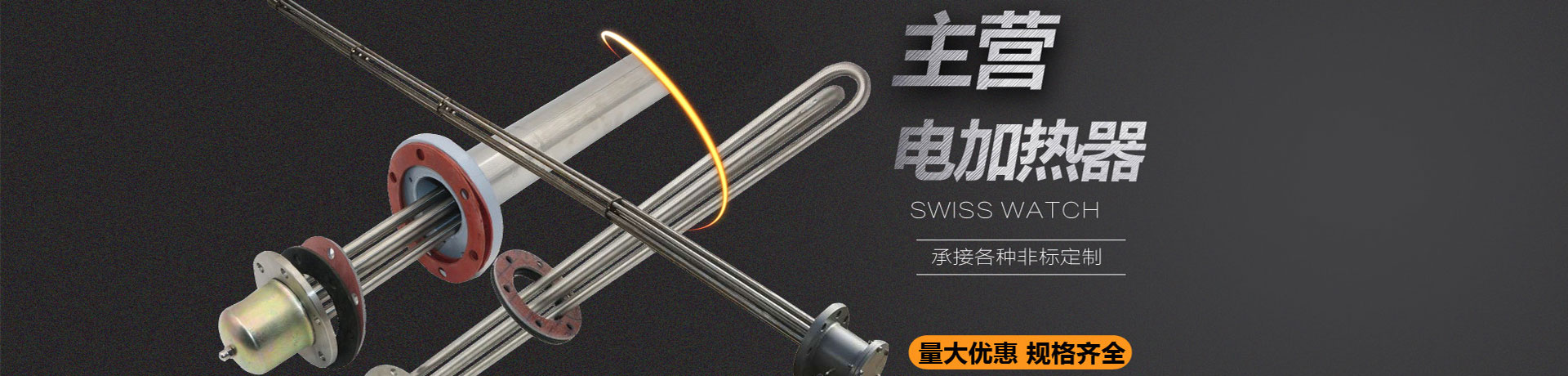
SRY Type Tubular Electric Heater
SRY Type Tubular Electric Heater is used for heating oil in open or closed oil tanks. SRY4 Type Tubular Electric Heater is used for heating flowing or circulating oil.
Detailed Introduction:
I.
SRY Type Tubular Electric Heater Applications
SRY2 and SRY3 Type Tubular Electric Heaters are used for heating oil in open or closed oil tanks. SRY4 Type Tubular Electric Heater is used for heating flowing or circulating oil.
II. Specifications and Technical Data
1. Specifications and Dimensions: See Table and Figure 2
Model
FL2 |
Voltage
(V)
|
Power
(kW) |
Dimensions and Installation Size (mm) |
Weight
(kg) |
A |
B Immersed Length in Oil |
C |
SRY2-220/1 |
220 |
1 |
307 |
230 |
" |
1.45 |
SRY2-220/2 |
220 |
2 |
507 |
430 |
" |
1.90 |
SRY2-220/3 |
220 |
3 |
707 |
630 |
" |
2.35 |
SRY2-220/4 |
220 |
4 |
922 |
845 |
" |
2.83 |
SRY3-220/1 |
220 |
1 |
625 |
375 |
570 |
0.77 |
SRY3-220/2 |
220 |
2 |
825 |
575 |
770 |
1.01 |
SRY3-220/3 |
220 |
3 |
925 |
675 |
870 |
1.13 |
SRY3-220/4 |
220 |
4 |
1125 |
875 |
1070 |
1.37 |
SRY4-220/5 |
220 |
5 |
697 |
620 |
" |
2.45 |
SRY4-220/6 |
220 |
6 |
807 |
730 |
" |
2.70 |
SRY4-220/8 |
220 |
8 |
1007 |
930 |
" |
3.05 |
Note: The mounting hole for SRY2 and SRY4 types is Ø72 mm.
2. Working voltage tolerance: not greater than 1.1 times the rated value, and the shell must be effectively grounded.
3. Working environment: relative humidity not greater than 95%, no explosive or corrosive gases.
4. Metal tube material: No. 10 steel.
5. Maximum working temperature: SRY2 and SRY3 are 300°C, SRY4 is 100°C.
6. Working pressure for SRY2 and SRY4 types is less than 2 kg/cm².
7. The fastener length for SRY3 type is 25 mm.
III. Usage, Maintenance, and Precautions
1. Dimension "B" in the dimension drawing must be fully immersed in oil to avoid burning out the element. The heated oil should be non-corrosive.
2. For SRY3 type, the working liquid level must be below the fastener and above the dimension line "B".
3. When melting solid oils such as asphalt and paraffin, reduce the voltage during melting, then raise to rated voltage after melting to prevent heat concentration and reduce the service life of the element.
4. If carbon deposits are found on the tube surface, they must be removed before reuse to avoid reducing efficiency or even burning out the element.
5. Elements should be stored in a dry place. If the insulation resistance drops below 1 megohm due to long-term storage, dry in an oven at about 200°C for several hours (or apply low voltage for several hours) to restore insulation resistance.