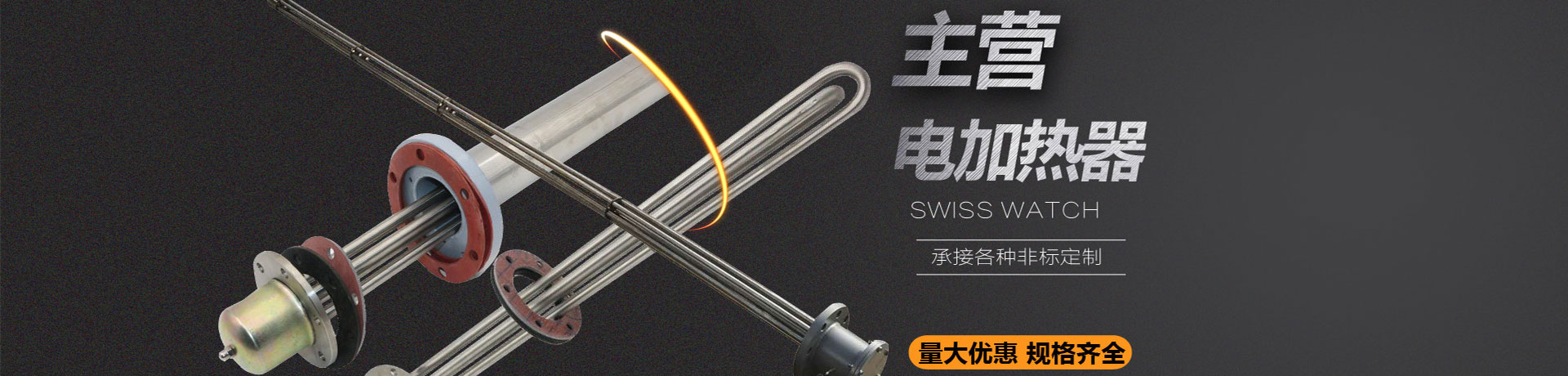
This question directly affects equipment lifespan. The LK-GZ-45 sheathed electric heater uses a structure in which a metal sheath isolates the resistance wire, so the heating element does not come into direct contact with the medium. When heating hydraulic oil or lubricating oil, the sheath can be made of carbon steel or stainless steel, and the surface power density is recommended to be controlled at 1–3 W/cm²; when heating water or weakly corrosive liquids, the sheath should preferably be made of stainless steel, and the power density can be 5–10 W/cm². Different media require different material selection and power density configurations, which must be clearly stated before ordering.
The power range of this model covers 1 kW to 6000 kW, and the operating voltage is 220 V or 380 V, which can be determined according to the on-site power supply and the heat balance calculation results of the heated object. The electric-to-heat conversion efficiency is not less than 98%, and the conventional pressure-bearing capacity is 1.0–8 MPa; high-pressure applications can be customized separately. The sheath structure supports threaded, flanged, straight-tube, and U-shaped forms, making it easy to install on hydraulic oil tanks, storage tanks, and pipelines.
The effective heating area must be fully immersed in liquid or solid metal, and dry firing is strictly prohibited; the operating voltage must not exceed 1.1 times the rated value, and the shell must be reliably grounded. Scale or carbon deposits on the tube surface should be removed promptly to avoid affecting heat transfer. The equipment should be stored in a dry place; when the insulation resistance is lower than 1 MΩ, it can be dried and restored in a 200°C oven. For explosion-proof applications, an explosion-proof structure is available, and the protection rating can reach IP65.
This product is commonly used for jacket heating of petrochemical reactors, preheating of heavy oil and lubricating oil, pipeline heat tracing and freeze protection, as well as oil temperature maintenance in hydraulic lubrication systems, lubricating oil heating for wind turbine gearboxes, and sterilization and drying equipment in the food and pharmaceutical industries. The conventional heat transfer temperature is not higher than 300°C, and the working pressure does not exceed 0.8 MPa; conditions beyond these ranges must be stated during the selection stage.