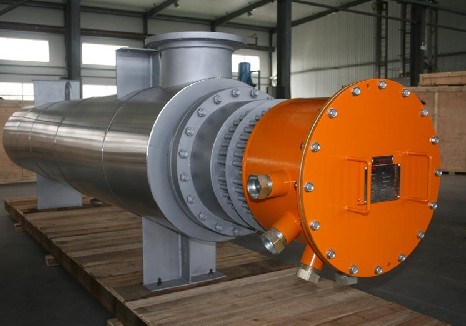
Tubular Electric Heater
A tubular electric heater, also known as a tubular electric heating element, is a widely used resistive electric heating device. It operates through the Joule heating effect generated when current flows through the internal resistance wire. It offers advantages such as a simple structure, high thermal efficiency, good mechanical strength, safety, reliability, and a long service life.
⚙️ Basic Structure and Working Principle
The core structure of a tubular electric heater mainly includes the following parts:
Metal sheath tube: As the outer shell, materials such as stainless steel, copper, aluminum, low-carbon steel, or titanium tubes can be selected based on the usage environment.
Resistance heating wire: A spiral electric heating alloy wire uniformly distributed along the central axis inside the tube, which is the core heating element. Common materials include nickel-chromium (Ni-Cr) wire or iron-chromium-aluminum (Fe-Cr-Al) wire.
Insulating filler: The gap between the heating wire and the sheath tube is tightly filled with crystalline magnesium oxide powder, which has good thermal conductivity and insulation properties.
Sealing material: Both ends of the tube are sealed with materials such as silicone, epoxy, or glass to prevent moisture and contaminants from entering.
Lead-out rod: Used to connect to an external power supply.
Working principle: When the external power supply is connected, current flows through the resistance heating wire, converting electrical energy into thermal energy (Joule heat) due to its resistance characteristics. The generated heat is rapidly and uniformly conducted to the surface of the metal sheath tube through the highly thermally conductive magnesium oxide powder, and then transferred to the heated medium (such as air, water, oil, or metal molds) via heat conduction, convection, or radiation.
Main Types and Characteristics
According to shape and process, tubular electric heaters can be divided into multiple types to suit different installation and heating requirements:
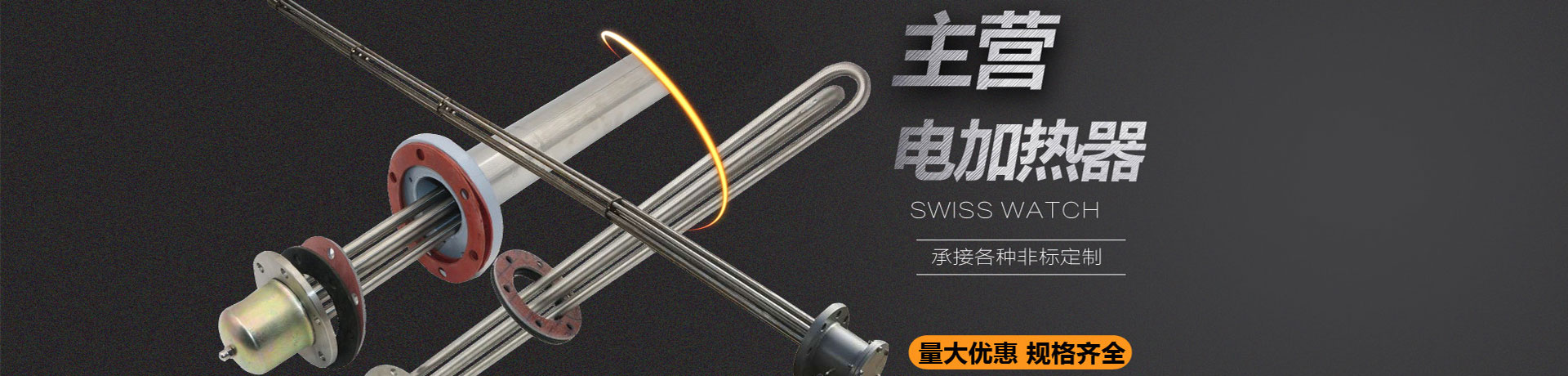
Classification by shape: Straight single-ended/double-ended heating tubes, U-shaped, W-shaped, spiral, and various special-shaped heating tubes.
Sheathed cable-type electric heating elements: This is a more technologically advanced type. It involves repeatedly drawing, reducing, and annealing the heating wire, magnesium oxide powder, and metal sheath into a compact flexible solid. Its characteristics include a slender shape, arbitrary bendability, high mechanical strength, uniform heating, and excellent insulation performance, making it especially suitable for uniform or spot heating in complex environments.
Application Fields
Tubular electric heaters are used in an extremely wide range of applications, covering almost all industrial and domestic fields that require heating:
Household appliances: Water heaters, ovens, coffee makers, electric irons, etc.
Industrial equipment: Various drying ovens, air heating furnaces, hot pressing molds, chemical reactors, oil tanks, acid and alkali tanks, molten salt furnaces, etc.
Special occasions: Explosion-proof areas (such as petroleum and chemical industries), pipeline heat tracing and freeze protection, large drying rooms, vacuum electric furnaces, etc.
Usage Precautions
To ensure safety and extend service life, the following points should be noted during use:
Strictly prohibit dry burning: For elements used to heat liquids or solids, the effective heating zone must be fully immersed in the medium; dry burning in air is strictly prohibited.
Heating solid media: When heating fusible metals, solid nitrates, paraffin, asphalt, etc., the voltage must first be reduced, and only after the medium is completely melted can the voltage be raised to the rated value.
Keep clean and dry: If scale or carbon deposits form on the tube surface, they should be removed promptly to avoid affecting heat dissipation and service life. The terminals should be kept dry and clean to prevent leakage or short circuits.
Environmental requirements: The relative humidity of the working environment should generally not exceed 95%, and there should be no explosive or corrosive gases (except for explosion-proof types).
Safety grounding: The outer shell must be effectively grounded, and the working voltage should not exceed 1.1 times the rated value.
Moisture treatment: If the insulation resistance drops below 1MΩ due to long-term storage, it can be dried in an oven at around 200°C, or heated by applying a reduced voltage until the insulation performance returns to normal.
Related Standards
The design, production, and inspection of tubular electric heaters must comply with relevant national and industry standards, such as:
JB/T 2379: "Metal Tubular Electric Heating Elements"
JB/T 4088: "Household Tubular Electric Heating Elements"
GB/T 23150: "Tubular Heaters for Water Heaters" (the latest standard is GB/T 23150-2024)