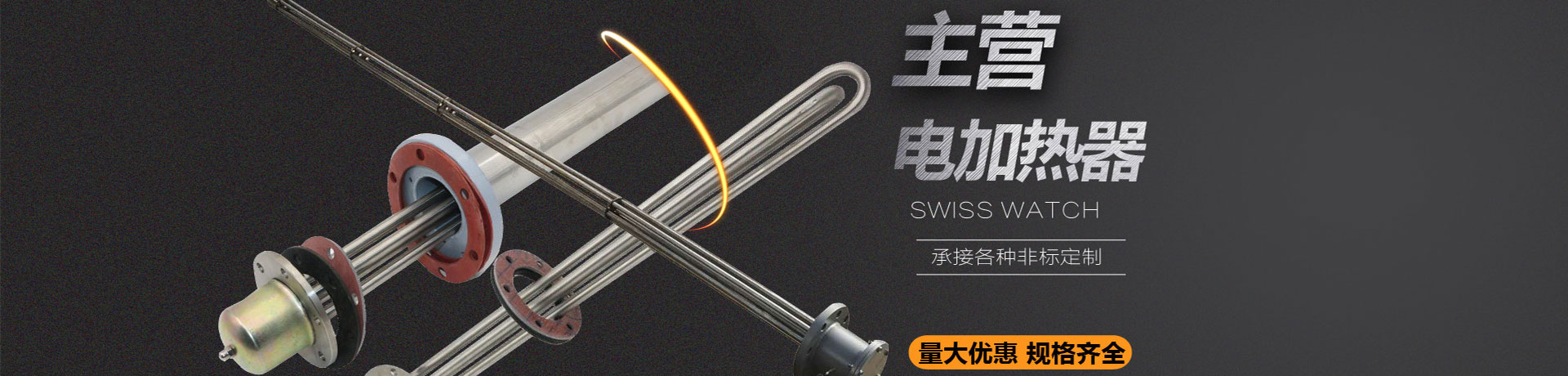
The selection of tubular electric heaters usually starts from three hard constraints: installation interface dimensions, medium corrosion level, and electrical protection method. The GCD-20 model is designed according to the general requirements of JB/T 2379 for tubular electric heating elements. The following lists the items that need to be checked from the perspective of design selection.
First confirm the hole diameter and insertion depth on the heated body. The GCD-20 model adopts a straight tube structure, and the tube diameter and effective heating length can be adjusted according to the cylinder wall thickness and flange specifications; for horizontal oil tanks, the heating section should be fully immersed, and for vertical pipeline installation, a cold-end length should be reserved to prevent the junction box from being heated. The relative position of the minimum liquid level line and the heating tube should be marked on the design drawing to prevent dry-burning conditions.
Power density is a key quantity affecting service life in selection. For media with higher viscosity such as heat transfer oil, the surface load should be controlled in a lower range, and a certain circulating flow rate of the medium should be ensured; for flowing water or low-viscosity liquids, a relatively higher load value can be used. During selection, calculate the required total power according to the medium type, working temperature, and flow rate, then convert it to the load per unit area to avoid local vaporization, coking, or tube wall overheating. If the medium is prone to scaling, the load should be reduced and cleaning space reserved. If this item is estimated with deviation, the replacement frequency will increase significantly later.
The tube material and sheath are selected according to the corrosiveness of the medium; common options include stainless steel and carbon steel coating schemes. The protection level of the junction box is determined according to on-site humidity and dust conditions; for explosion-proof occasions, the corresponding explosion-proof structure should be selected. The lead wire length and thread or flange interface specifications should be noted at the time of ordering to reduce on-site secondary processing.
The combination of rated voltage and power must match the distribution circuit; it is recommended to configure overtemperature protection and liquid level interlock, connected to the control cabinet to achieve over-temperature power cutoff. When multiple units are used in parallel, the total current and line current-carrying capacity should be verified.
Suitable for oil tanks, water tanks, pipeline heat tracing, and air heating, with a wide application range and strong adaptability to installation posture. Specific parameters are subject to the ordering technical agreement.