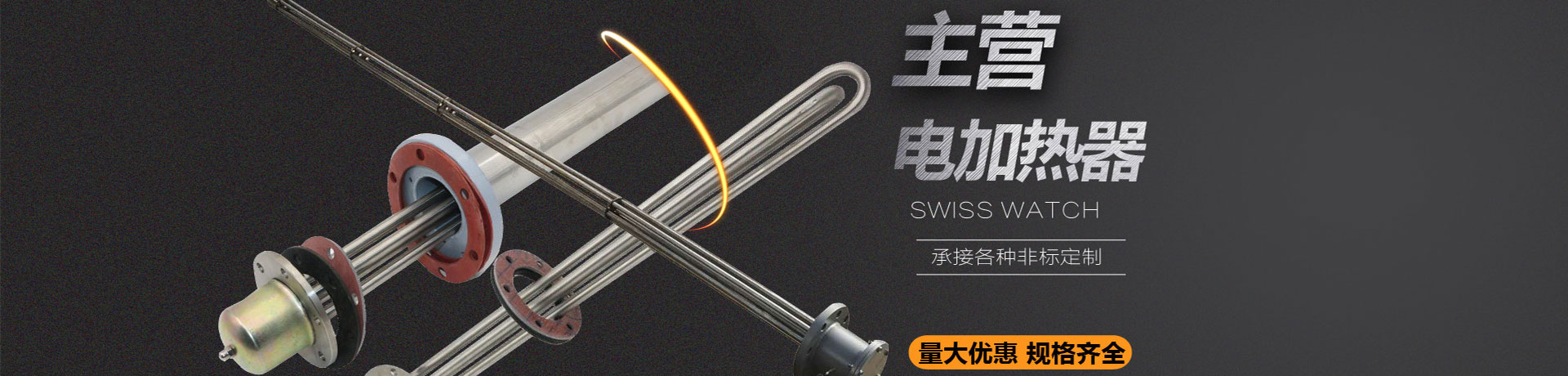
When receiving an inquiry for bolt electric heating rods, procurement personnel often encounter a specific problem: although all are marked for steam turbine bolt disassembly and assembly heating, different suppliers provide significantly different power, length, and lead configurations, while the on-site bolt specifications and heating hole dimensions are already fixed. At this point, it is necessary to first verify the applicable standard and installation interface before discussing price and delivery time. The following points are organized according to the procurement process for selection comparison.
The industry standard for bolt electric heating rods is ZBK54019-88 "Electric Heaters for Steam Turbine Bolts," which specifies model specifications, technical requirements, and test methods. Procurement documents may require the supplier to indicate the reference standard, rated voltage, rated power, tube diameter, and effective heating length, so that each item can be checked during incoming inspection. The numbers in the model usually correspond to voltage or structural codes; naming conventions among different manufacturers are not entirely consistent, and the parameter table should be taken as authoritative.
This product adopts a single-ended lead structure, with wiring led out from one end and the other end sealed, making it suitable for insertion into the central heating hole of a bolt. During procurement, it is necessary to confirm whether the clearance between the outer diameter of the heating rod and the bolt hole diameter, the insertion depth, and the lead length match the on-site installation space. Too small a clearance increases assembly difficulty, while too large a clearance affects heat transfer efficiency. Generally, requirements should be specified based on the fit tolerance between the bolt hole diameter and the rod outer diameter.
When the power value is too low, the heating rate is slow, and the typical working condition of rising to 450°C within 30 minutes may not be met; when the value is too high, the local surface temperature of the heating rod can easily exceed the allowable range of the bolt material, causing changes in the bolt's metallographic structure. Procurement personnel can confirm the bolt material, target temperature, and allowable heating time with the technical department, and have the supplier calculate the surface load before determining the power. It is not advisable to estimate simply based on bolt dimensions.
Common rated voltages are 220V or 380V. Before procurement, the on-site power supply conditions and control cabinet wiring capacity should be verified. Lead forms include screw terminals, plug-in types, and compensated leads, which must correspond to the temperature control equipment interface. Insulation resistance and withstand voltage tests can be sampled according to standard requirements. After arrival, it is recommended to measure the cold insulation resistance with a megohmmeter and record it.
The rod body material is usually stainless steel or heat-resistant alloy. During procurement, the supplier may be required to provide material certification. Surface treatment affects oxidation resistance and heat dissipation consistency. For reused heating rods, attention can be paid to the sealing process and the sealing structure at the lead root to reduce insulation degradation caused by moisture intrusion.
This product is mainly used for heating during the disassembly and assembly of bolts in large equipment such as steam turbines and gas turbines, and can also be used for hot assembly of other interference-fit parts. During acceptance, check the model, quantity, accessories, and certificate against the packing list, sample-measure the external dimensions and cold resistance, and keep records. Before use, confirm that the heating rod and bolt hole are clean and free of debris, and that the wiring is reliably grounded.