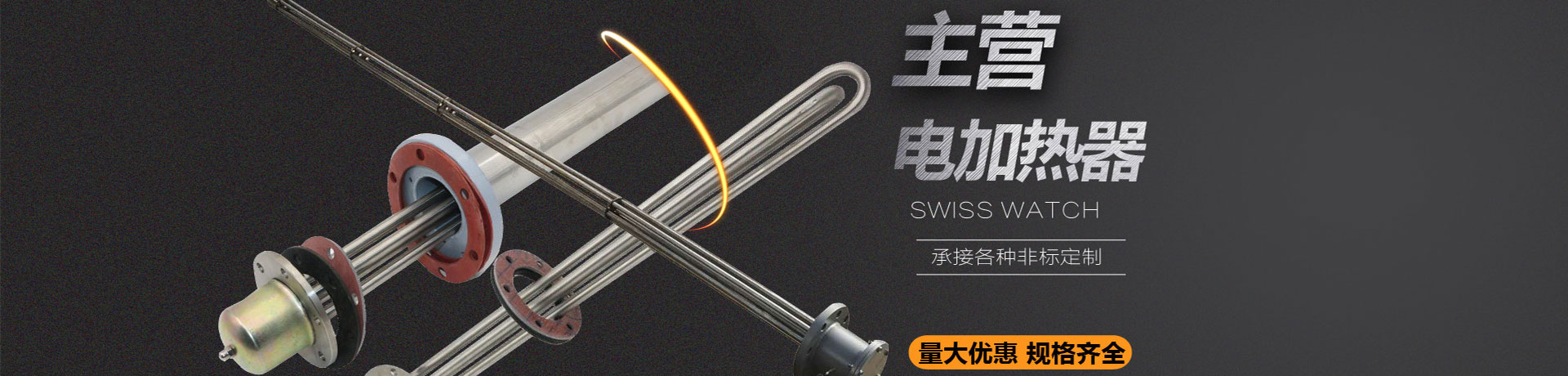
A common situation on site is that bolts on the same flange, when heated separately with heating rods of the same specification, some reach the specified elongation while others always fall short; after disassembly and inspection, it is found that some heating rods have excessively high surface temperatures and resistance values deviating from factory values. The problem usually lies not in operation, but in selection, where the bolt center hole size is simply matched to the heating rod outer diameter and power density, ignoring tolerance fit and actual fluctuations in power supply voltage.
The bolt center hole diameter is typically 22.6±0.2mm. If the heating rod outer diameter is close to the upper limit, insertion becomes difficult and local clearances are uneven, resulting in differences in heat transfer. The DJR-260 controls the rod body outer diameter tolerance according to the center hole fit dimensions, keeping the gap between the tube wall and hole wall within a reasonable range to reduce local overheating caused by poor contact. For bolts whose hole diameters deviate from this range, parameters must be separately agreed upon between the user and the manufacturer.
Selection personnel often face a trade-off between heating time and rod surface load. If the power is selected too low, heating time is prolonged and the temperature difference between the inside and outside of the bolt increases; if selected too high, the surface load rises. The DJR-260 offers multiple power levels for designers to determine after calculating based on bolt specifications, ambient temperature, and allowable heating time. Parameters shall be implemented with reference to the standard table for bolt electric heaters approved by the Ministry of Machine-Building and Electronics Industry in 1988, and power supply conditions must be specified at the time of ordering.
After heating is completed, the heating rod should be removed only after the bolt has cooled to the specified temperature, to avoid deformation under stress or burns at high temperatures. At the selection stage, the arrangement of temperature measurement points and the cooling waiting time should be incorporated into the process documents and considered together with the electrical parameters of the heating rod, rather than waiting until problems occur on site to take remedial measures.