Electric heating furnace
Electric heating furnace is a relatively broad concept, covering many different types of equipment. The following is a summary of the main types:
Working principle
The core principle of an electric heating furnace is to use electric current passing through resistance materials to generate Joule heat (Q = I²Rt), converting electrical energy into thermal energy, which is then transferred to the workpiece or material in the furnace chamber through radiation, conduction, or convection.
Main types
Resistance heating furnace (most common)
Using resistance wire, resistance strip, silicon carbide rod, silicon molybdenum rod, etc. as heating elements, directly heating the workpiece. According to structure, it can be divided into:
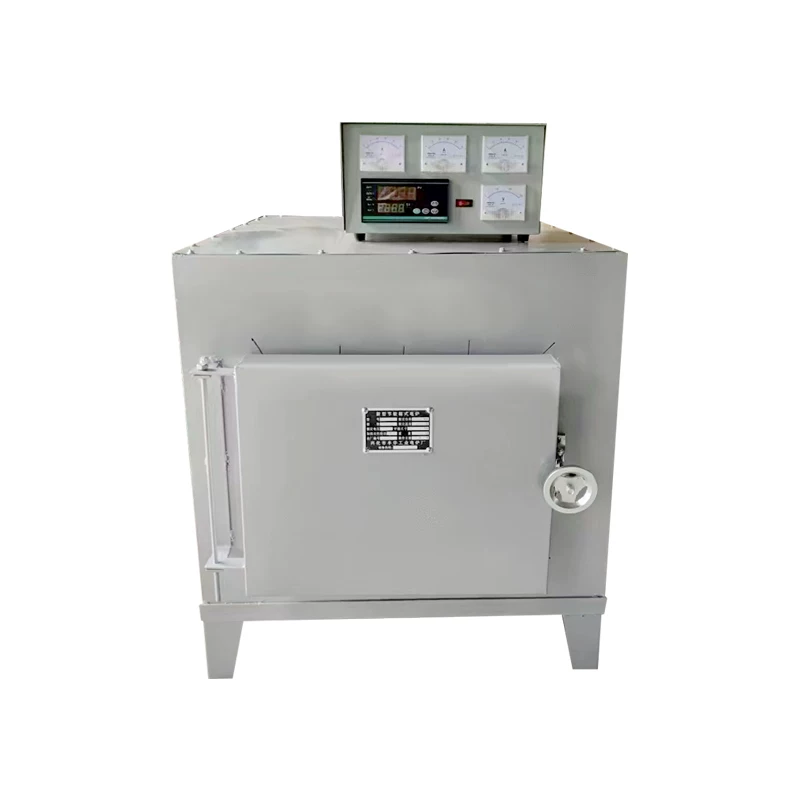
Box-type resistance furnace: compact structure, precise temperature control, suitable for laboratory and small to medium batch heat treatment, temperature range 100–1200℃
Car-bottom resistance furnace: easy loading and unloading, suitable for heat treatment of large forgings and castings, temperature can reach above 1200℃
Pit-type resistance furnace: vertical furnace chamber, suitable for hanging heating of long shaft workpieces, uniform thermal field, small deformation
Bell-type resistance furnace: controllable atmosphere, suitable for bright annealing of coils and steel strips, no oxidation on the surface
Tube-type resistance furnace: with quartz or corundum tube furnace chamber, used for heating under specific atmospheres
Vacuum/atmosphere resistance furnace: heating under vacuum or protective gas to prevent oxidation
Electric heating thermal oil furnace
Using thermal oil as the heat carrier, forced liquid phase circulation through a circulation pump, transferring heat to the heat-using equipment. Working temperature 0–350℃, thermal efficiency can reach above 95%, temperature control accuracy ±1℃. Widely used in petrochemical, textile printing and dyeing, plastic rubber, food processing and other industries.
Electric phase-change heating furnace
Relying on electrical energy to achieve material heating, thermal efficiency as high as above 96%, achieving zero carbon emissions. Suitable for heating crude oil, water-bearing crude oil, natural gas, heating water and other materials. Xinjiang Oilfield has already put into use the first 3 MW high-power electric phase-change heating furnace in early 2024.
Electric induction heating furnace
Using the principle of electromagnetic induction to heat conductive materials, commonly used for metal smelting, capacity ranges from a few kilograms to several tons, temperature can reach above 1500℃.
Selection key points
Temperature range: choose according to process requirements, low-temperature furnaces (<650℃) mainly use convection heating, medium and high-temperature furnaces (>650℃) mainly use radiation heating
Furnace lining material: mainstream adopts composite structure of lightweight high-alumina brick + ceramic fiber module, not the thicker the better, excessive thickness will extend heating time and increase energy consumption
Heating elements: nickel-chromium alloy suitable for medium and low temperatures, silicon carbide rod/silicon molybdenum rod suitable for high temperatures, need to pay attention to replacement cycle and spare parts cost
Total cost evaluation: it is recommended to include 3-year spare parts budget in total cost, the replacement cycle difference of heating elements and temperature control systems of different brands can reach 2–3 times