
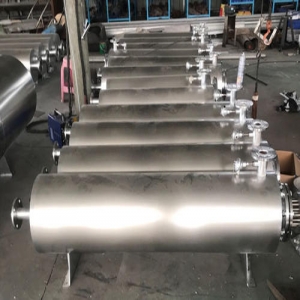
During on-site operation and maintenance, the outlet temperature often fails to reach the set value, and the heat exchanger area is often estimated too small based on experience; however, an oversized area increases investment and footprint. Such problems are mostly related to mismatches in material selection, medium corrosiveness, and temperature range.
If the heat exchange area is estimated only by experience, it is likely to be too small, resulting in outlet temperature not meeting standards; if too large, it increases equipment investment and occupied space. Selection must consider medium corrosiveness and operating temperature range.
Cast aluminum heat exchangers are suitable for medium- and low-temperature uniform heating applications such as plastic machinery, die heads, and water heaters, with relatively low cost. Cast copper heat exchangers have better thermal conductivity and high mechanical strength, and are often used in chemical pipelines, alloy die-casting machines, and high-demand molds. The HRS-380 hot and cold heat exchanger can select cast aluminum or cast copper material according to the medium and temperature, and calculate the area based on heat load to avoid estimation deviation.
Suitable for plastic machinery, chemical pipelines, alloy die-casting machines, etc. During operation and maintenance, regularly check medium corrosion conditions to ensure the material matches the working conditions. For specific parameters, please consult technical personnel.

