
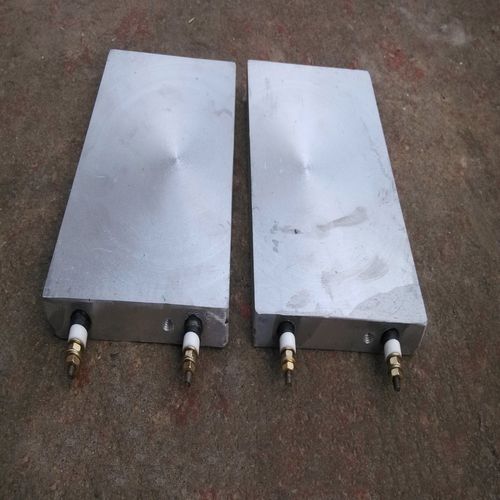
Electric Heating Plate
An electric heating plate is a plate-shaped electric heating device that directly converts electrical energy into thermal energy. It uniformly conducts heat to the surface through high thermal conductivity materials, featuring fast heating, high thermal efficiency (some can reach over 96%), and precise temperature control. It is widely used in industries, laboratories, household appliances, and other fields.
Core Working Principle
Electric heating plates mainly generate heat through the following two methods:
Resistance heating: This is the most common method. When current passes through internal resistance wires (such as nickel-chromium alloy) or ceramic heating elements, Joule heat is generated due to the resistance effect. The heat is then uniformly conducted to the metal or non-metal panel through high thermal conductivity insulating materials such as mica or ceramics.
Electromagnetic induction heating: High-frequency current passes through a coil to generate an alternating magnetic field. When ferromagnetic cookware or other objects are placed on the plate, eddy currents are induced inside them, causing them to heat up themselves. This method heats quickly, and the panel itself does not heat up, offering high safety.
Temperature control is typically achieved through a closed-loop system consisting of temperature sensors (such as thermocouples) and PID controllers, which monitor and adjust heating power in real-time to ensure the temperature remains stable at the set value.
Main Features
Uniform heating: Utilizes surface heating or evenly distributed heating wires, combined with high thermal conductivity panels, to ensure consistent temperature across the entire heating area.
Precise temperature control: Precision models use PID intelligent temperature control with accuracy up to ±0.2°C to ±2°C, meeting stringent laboratory and industrial requirements.
Safe and reliable: Internally uses insulating materials such as mica and ceramics to isolate heating elements from the casing, and is equipped with multiple safety mechanisms such as overheat protection and grounding protection.
High efficiency and energy saving: High electrothermal conversion efficiency, low thermal inertia, rapid heating, and minimal energy loss.
Diverse forms: Can be manufactured in various shapes such as plates, sheets, cylinders, and supports non-standard customization to adapt to different installation spaces.
Common Types and Specifications
Electric heating plates come in many varieties and can be distinguished by panel material, structural type, and application scenario:
Table
Download as Table
Export as Image
Classification Dimension Main Types Typical Characteristics and Applications
By Panel Material Stainless Steel Type Corrosion-resistant, high mechanical strength, suitable for conventional heating below 300°C and bearing heavy loads
Graphite/Microcrystalline Glass Type High temperature resistance (up to 800°C), fast heat conduction, resistant to strong acids and alkalis, suitable for harsh environments such as laboratory digestion
Ceramic Type Good insulation, low leakage current, smooth surface, high safety, mostly used in household appliances and light industry
Silicone Rubber/Carbon Fiber Type Ultra-thin and flexible, bendable, waterproof and moisture-proof, suitable for close-fitting heating or low-temperature radiant heating
By Structural Type Cast Aluminum/Cast Copper Type High strength, not easily deformed, long lifespan, suitable for vibrating environments or complex specifications
Thin-shell Type Simple structure, low cost, mostly low power below 800W, commonly found in small household appliances
Tubular Element Cast Plate Type Casts tubular heating elements into metal plates, high thermal efficiency, high mechanical strength
Examples of common specification parameters:
Temperature range: From room temperature to 600°C, with graphite and microcrystalline glass materials having higher upper limits.
Power range: From tens of watts for household warming plates to 20,000W for industrial heating plates, with customization supported.
Dimensions: Heating area ranges from a few square centimeters for laboratory small plates to several square meters for large industrial platforms.
Power supply: Small power devices use AC220V, while large industrial equipment typically uses AC380V three-phase electricity.
Main Application Fields
Laboratory pretreatment: Used for wet digestion, boiling, acid evaporation, constant temperature heating of samples in environmental, food, pharmaceutical, semiconductor, and other industries.
Industrial heating: Plastic machinery barrel heating, mold heating, chemical reactor insulation, metal parts preheating, etc.
Household appliances: Rice cookers, electric irons, food warming plates, induction cookers, electric heaters, etc.
New energy: Thermal management systems for new energy vehicle battery packs.
Selection Suggestions
When selecting an electric heating plate, it is recommended to focus on the following factors:
Application scenario:
Laboratory strong acid digestion: Prefer graphite or ceramic panels, where corrosion resistance is key.
Industrial heavy load/vibration: Choose cast aluminum/cast copper or tubular element cast plate types with high mechanical strength.
Household warming/heating: Stainless steel, ceramic, or carbon fiber plates offer good cost-effectiveness, safety, and reliability.
Irregular surface fitting: Silicone rubber heating plates are an ideal choice.
Process parameters:
Temperature: Clarify the maximum working temperature and required temperature control accuracy.
Power: Calculate based on heating area and heating rate requirements. Reference formula: Power (W) ≈ Heating area (cm²) × 1.5~2.5. For example, for a 30cm×20cm surface, 500-1500W is usually sufficient; for above 40cm×30cm, 1500-3000W is needed.
Safety and compliance:
Confirm whether the product has passed relevant safety certifications, such as the IEC 60335-2-12 standard from the International Electrotechnical Commission.
Check whether it is equipped with safety functions such as overheat protection, leakage protection, and grounding protection.
Control method:
For general applications, knob or button temperature adjustment is acceptable.
For precision experiments or industrial processes, it is recommended to choose intelligent models with PID temperature control, timing functions, over-temperature alarms, and even remote control via mobile apps.