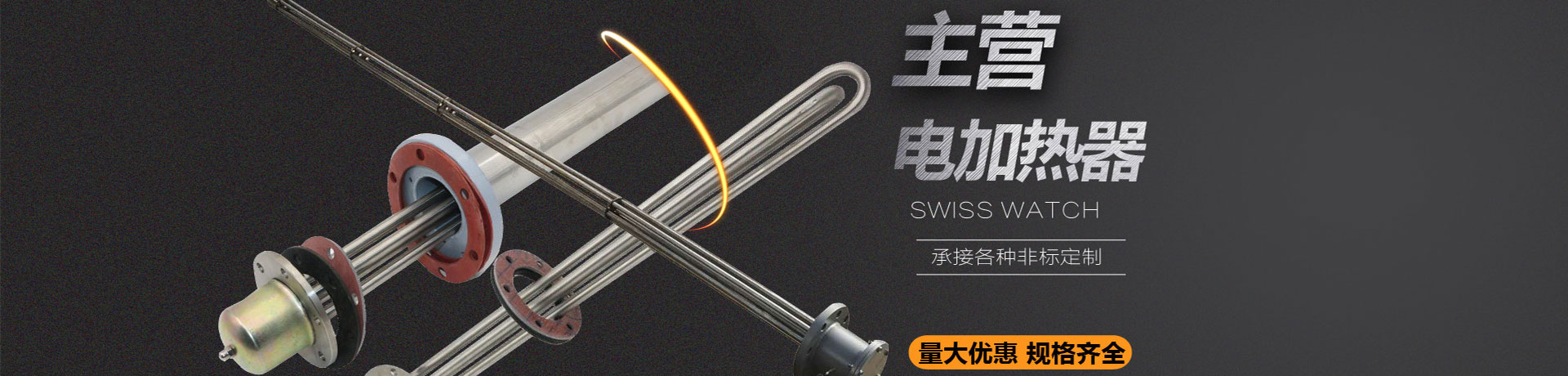
Common on-site phenomenon: Two electric heating coils of the same power on the same barrel—one shows a noticeably higher surface temperature while the other heats up slowly. Upon disassembly and inspection, both coils are rated at 220V, but the supply phase voltage is 380V. Long-term overvoltage operation causes the former's resistance wire to age rapidly, while the latter suffers from insufficient power due to poor contact. Most of these problems stem from failure to verify voltage and temperature tolerance margins during the selection stage.
When selecting, first verify the electric heating coil's nameplate voltage against the on-site supply voltage. If the supply is three-phase 380V, choose a coil rated at 380V. Do not connect a 220V coil directly to a 380V circuit; otherwise, long-term overvoltage operation will shorten the resistance wire's service life. The DJR-810 is available in both 220V and 380V specifications, and the required voltage must be clearly specified when ordering.
The coil's temperature tolerance is a key margin indicator for selection. If the maximum process temperature is 300°C, it is recommended to choose an electric heating coil with a temperature tolerance of no less than 360°C. The DJR-810 is designed with a temperature tolerance of 400°C, which covers 300°C process scenarios with a safety margin, avoiding insulation aging caused by local overheating.
Excessively high power density causes local overheating, while too low a density prolongs heating time. When selecting, calculate the required total power based on the barrel diameter, length, and target heating rate, then distribute it across the coil surface area. The DJR-810 is designed with a power density of 3.5W/cm², suitable for medium- and low-temperature heating scenarios. Purchasing personnel can provide barrel dimensions for technical staff to calculate a matching solution.
An insulation layer covering the electric heating coil can reduce heat loss and lower long-term operating energy consumption. The DJR-810 features a stainless steel shell with a ceramic fiber insulation layer. At the same process temperature, surface heat loss is relatively low, making it suitable for continuous operation conditions. During design and selection, the investment-return of the insulation structure can be evaluated based on equipment operating hours.
The fit clearance between the coil's inner diameter and the barrel's outer diameter is recommended to be controlled at 0.5–1mm; excessive clearance reduces heat transfer efficiency. Use bolts for fastening to avoid poor contact caused by loosening. Routine maintenance should include regular checks for terminal oxidation and surface cracks on the coil, and timely replacement if abnormalities are found.