
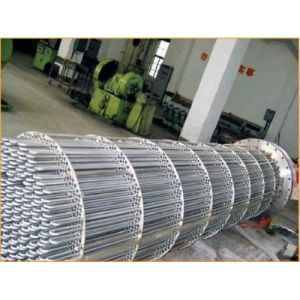
During on-site operation and maintenance, if the flue gas side pressure drop is found to rise continuously and exceed 800Pa, it is recommended to first check whether the surface of the finned tube bundle has ash accumulation or scaling. The fin spacing of finned tube heat exchangers is relatively small, and dust in the flue gas easily bridges between the fins, reducing the flow cross-section. You can first measure the inlet and outlet pressure difference and compare it with the design value, then arrange soot blowing or cleaning. If the pressure drop is still high after cleaning, check whether the flue gas flow rate exceeds the design range.
The deviation between the outlet temperature and the design value should not exceed 5%. If the deviation is too large, first confirm whether the medium flow rate is stable, then check whether the fouling thermal resistance on the heat exchange surface has increased. For the HZQ-620 finned tube heat exchanger, it is recommended to regularly record the inlet and outlet temperatures, pressure difference, and flow rate to form a trend record. When the deviation persists, the allowable range of the material can be checked in combination with the base tube wall temperature to determine whether operating parameters need to be adjusted or maintenance should be arranged.
If a single tube leak is found, that tube bundle can be isolated first to maintain short-term operation. After shutdown, repair by welding or plug the tube according to a welding process matching the material. The number of plugged tubes should not exceed 10% of the total number of tube bundles. If this proportion is exceeded, the heat exchange area loss is relatively large, and it is recommended to evaluate overall replacement or adding rows of finned tubes. During isolation, monitoring of outlet temperature and pressure difference should be strengthened to avoid excessive load on adjacent tube bundles.
Design and selection personnel recommend calculating the required number of finned tube rows based on flue gas flow rate, inlet temperature, and allowable pressure drop, and then checking whether the base tube wall temperature exceeds the allowable range of the material. The allowable pressure drop on the flue gas side is recommended to be controlled within 800Pa, and the deviation between the medium outlet temperature and the design value should not exceed 5%. After the number of rows is determined, the tube bundle arrangement also needs to be adjusted according to on-site space and cleaning methods. The HZQ-620 finned tube heat exchanger is suitable for scenarios such as waste heat recovery, HVAC, and industrial process cooling. Specific parameters are subject to the technical agreement.

